Roof Care Guide
What Is Roof Biocide Treatment? And How Long It Lasts
A biocide treatment kills the moss, algae and lichen left on a roof and stops it growing straight back.
It is the step that makes a roof clean last for years rather than months.
It also helps the tiles last longer, keep their colour, and protects the guarantee a jet wash can void.
Protected for years, not just clean for a day.
- Roofers, not just cleaners
- We treat, never jet wash
- Stays clear 2 to 5 years
- Protects your tile guarantee
- Stockport & East Cheshire
- Honest free assessment, no hard sell
We are Daniel Scott Roofing, a family-run firm of roofers, not just cleaners, covering Stockport and East Cheshire. Because we fit and guarantee roofs as well as clean and maintain them, we have no reason to talk you into work you do not need, and every reason to treat a roof in a way that never damages the tiles. Here is the honest version of how biocide works.
The honest verdict
Done properly, a biocide treatment keeps a roof clear for two to five years, not the few months a scrape-only clean buys you. Kept clear, the roof lasts longer, the tiles hold their proper colour instead of staining green and black, and because it is a gentle treatment and never a jet wash, it protects your tile guarantee, which a pressure wash can void. Below is how it works, how long it really lasts, and what it should and should not cost.
The short answer
What is a roof biocide treatment?
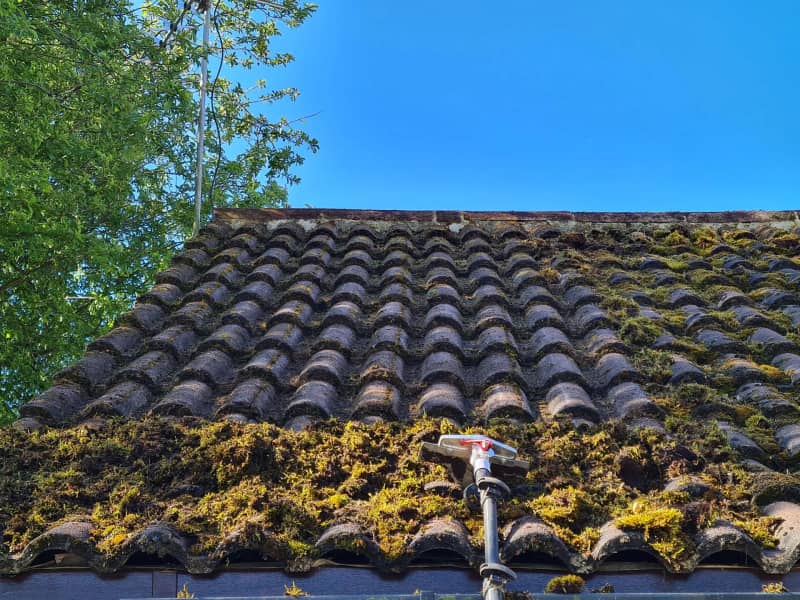
Most of the growth on a roof starts as spores far too small to see, sitting on and just under the surface of the tile. Scraping the visible moss off does nothing to those spores, which is why a roof that is only scraped greens up again within a season.
A biocide soaks into the surface and kills that growth at the root, the spores included. That is the difference between a roof that looks clean for a few months and one that stays clear for years.
It is the same answer for the black streaks and dark staining you see on so many roofs. That is algae and trapped grime rather than moss, and a biocide kills it at the root so the rain can carry it off over the following weeks, with no pressure washing needed.
-
It kills the growth at the root
Not just the green you can see, but the moss, algae and lichen spores sitting on and under the surface of the tile, which are what bring the growth straight back.
-
It makes a clean last years, not months
It is the part the cheapest quotes leave out, and the part that decides whether your money buys a season or several years of a clear roof.
-
It is gentle on the tiles
No heat, no high pressure, nothing forced under the tiles. It works over time with the rain, which is exactly why it does the roof no harm.
The method
How does roof biocide treatment work?
It goes on after the moss is removed, or on its own where the growth is light, then it keeps working for weeks.
It goes on the cleared roof
On a roof with established moss, the moss is removed by hand first and the biocide is applied to the cleared roof. On a roof that is only lightly greening up, it can be applied on its own, with no scraping at all.
It soaks in and kills the spores
Once it is on, it soaks into the surface and kills the moss, algae and lichen spores, including the ones too small to see. That is what stops the green coming back within months.
Then it keeps working
Over the following weeks, rainfall carries it across the slope and the dead growth gradually weathers and washes away. The result builds rather than appearing on the day, so a roof can look much the same the afternoon we leave and noticeably clearer a month later.
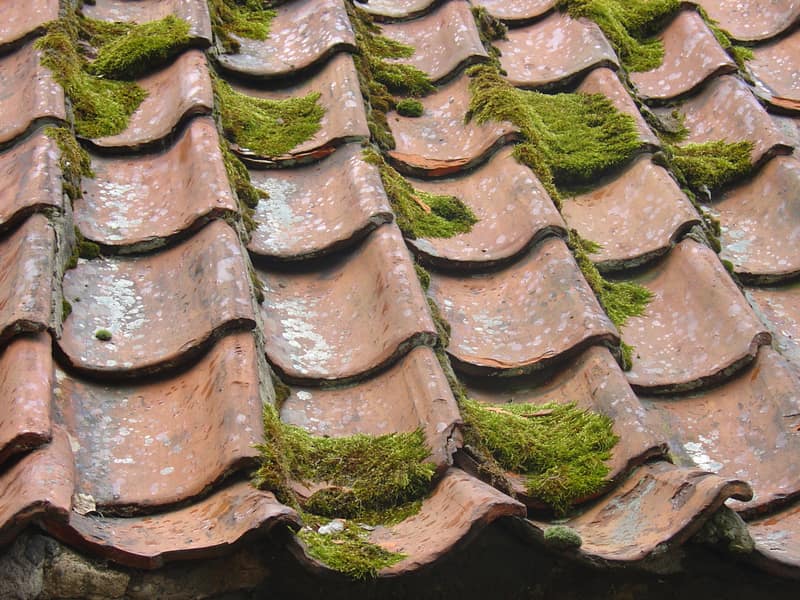
No heat, no high pressure, nothing forced under the tiles. The roof is treated, not attacked.
The headline number
How long does a roof biocide treatment last?
Those clear years are about more than looks. The longer moss and algae stay off the tiles, the longer the roof itself lasts, the better it holds its colour, and the safer your tile guarantee stays.
After a proper clean and biocide treatment, most roofs stay clear for two to five years, and longer on a sunny, well-drained roof in the open.
What shortens it is shade and damp. A north-facing slope, or one under overhanging trees, gets the least sun and dries out slowest, so growth returns there first and fastest. A south-facing roof in the open will hold its finish far longer.
One thing worth knowing: lichen is the stubborn one. A biocide kills it along with the moss and algae, but where moss and algae tend to clear within a few weeks, the crusty grey lichen can take months to weather off, and the odd patch needs a second light treatment. That is the biocide still doing its job, not a sign it has failed.
For most roofs a light biocide-only re-treatment every two to three years keeps the growth from ever getting a grip again, which costs a fraction of letting it build back up to a full strip.
A fair question
Is roof biocide treatment safe for pets, plants and ponds?
Applied correctly, yes. We sheet and protect plants and surfaces before we start, keep the treatment out of watercourses and drains, and ask that pets are kept off the treated area until it has dried.
If you have a pond, tell us when you book. We take extra care around it, and we are happy to talk through exactly what we are using and how we are protecting it.
A biocide is only safe in the hands of someone applying it properly, which is another reason a roof treatment is not a DIY job from a bottle off the shelf. A roofer treating the roof can also spot the problems the growth tends to hide, like a slipped tile or a tired ridge, while they are up there.
Got a pond or planting you are worried about? Call us on 0161 566 7522 and we will talk it through.
Treatment, not a wash
Biocide treatment vs pressure or jet washing
If you have seen a roof blasted clean in a dramatic before-and-after, that is a pressure wash, and it is the opposite of what a biocide does.
We never use it, and neither should anyone treating a roof you want to keep. UK tile manufacturers and the roofing trade body are united against it.
-
The National Federation of Roofing Contractors (NFRC) advises against pressure washing a roof, because the high pressure can damage the tiles and shorten their service life.
-
Tile manufacturers including Marley and the Roof Tile Association advise against jet washing because the high-pressure spray erodes the tile surface and shortens its lifespan. Several tile manufacturers also warn that jet washing can invalidate the tile guarantee.
-
High pressure also forces water up under the laps and into the roof, where it can soak felt, battens and insulation and lead to leaks.
A biocide reaches the same end result, a clear roof, without any of that. It is slower, because it works with the weather rather than against the tiles, and that is the point. So if you are searching for a biocide wash, what you actually want is a biocide treatment: a treatment, not a wash.
The honest answer
Biocide treatment or a full roof clean: which does your roof need?
Do you need scraping as well, or is biocide enough? It depends on how much growth there is, and we will tell you honestly which one your roof needs.
Thick, established moss
It has to come off by hand first, then the roof is treated with a biocide to stop it returning. Biocide alone will not shift a heavy moss carpet. That is a full clean: hand removal plus biocide.
Light growth, or already cleaned
A biocide on its own is enough, with no scraping at all. It is the lowest-cost, least disruptive option, and the result builds over the following weeks. That is a biocide-only treatment.
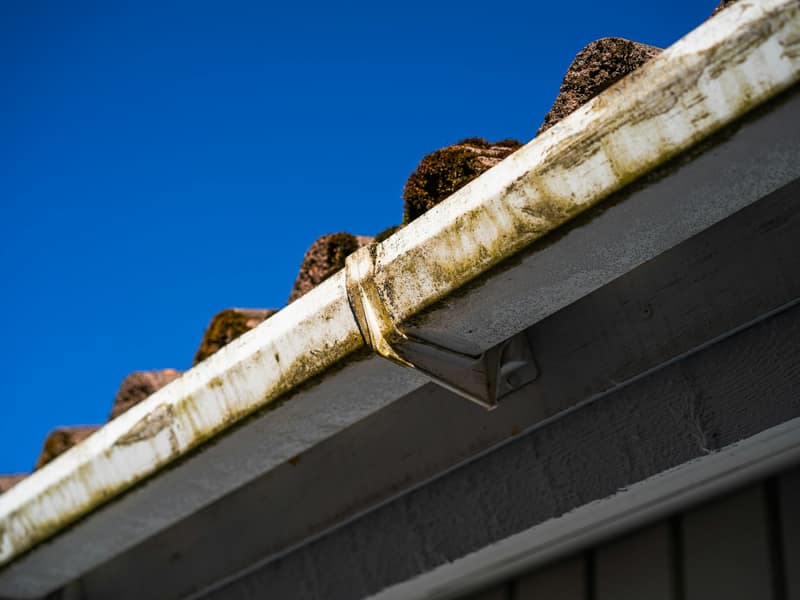
Most roofs that have been left a few years need the full clean once, then a biocide-only top-up keeps them clear. Not sure which yours needs? That is exactly what a free assessment is for.
Not sure whether yours needs a full clean or just a treatment?
We will come out, take a proper look and tell you honestly which one your roof needs. No pressure, no hard sell.
Transparent pricing
How much does a roof biocide treatment cost?
We price by the square metre of roof. A biocide-only treatment is £5 per m², and a full clean of hand moss removal plus biocide is £10 per m² (£5 per m² to scrape, £5 per m² for the biocide). Every rate includes materials and labour, and rates are shown before VAT.
The full rate card, the worked totals by property type, and what is and is not included are all on our roof cleaning page.
Quick answers
Roof biocide treatment: frequently asked questions
What is a biocide treatment for a roof?
It is a solution applied to the roof that kills moss, algae and lichen, including the spores too small to see, and stops them re-establishing. It is what makes a clean last for years rather than months. It is a treatment, not a pressure wash.
Is roof biocide just bleach?
No. A proper roof biocide is a dedicated treatment that kills moss, algae and lichen at the root and keeps working for weeks after it is applied. The strong household bleach some cheap operators spray can lighten or patch the colour of the tiles and does little to stop the growth coming back.
Will a biocide get rid of black streaks and algae on my roof?
Yes. The dark streaks on a roof are usually algae and trapped grime rather than moss. A biocide kills the algae at the root, and the rain carries the dead growth and staining off over the following weeks, with no pressure washing needed.
How does roof biocide treatment work?
It soaks into the surface and kills the growth at the root. It then keeps working over the weeks after it is applied, as rainfall carries it across the roof and the dead growth weathers away, so the result builds rather than appearing instantly.
How long does a roof biocide treatment last?
Two to five years on most roofs, and longer on a sunny, well-drained one. A shaded, north-facing roof under trees needs treating more often, so we usually suggest a light re-treatment every two to three years.
Does a biocide treatment help my roof last longer?
Yes. Moss and algae trap moisture against the tiles, and over the years that can shorten their life and dull their colour, so keeping the roof clear with a biocide helps protect both. And because it is a gentle treatment rather than a jet wash, it keeps your tile guarantee intact, where pressure washing can void it.
Does a biocide kill lichen as well as moss?
Yes, but lichen is the stubborn one. Moss and algae usually clear within weeks, while the crusty grey lichen can take a few months to weather off and the odd patch needs a second light treatment. That is normal rather than a sign it has not worked.
Is roof biocide safe for pets, plants and ponds?
Yes, when applied correctly. We protect plants and surfaces, keep it out of watercourses and drains, and ask that pets are kept off the treated area until it has dried. Tell us if you have a pond and we take extra care around it.
Is a biocide treatment the same as a jet wash or pressure wash?
No, and it is the opposite approach. Pressure washing blasts the roof and can strip the tile surface and force water inside, which is why the NFRC and tile manufacturers advise against it, and several manufacturers warn it can void the tile guarantee. A biocide treats the roof gently and reaches the same clear result without the damage.
Is a biocide treatment the same as soft washing?
Yes, in approach. Soft washing means cleaning a roof at low pressure and letting the treatment and the weather do the work, rather than blasting it. A biocide treatment is exactly that: no high pressure, just the treatment killing the growth and the rain carrying it away over the following weeks.
Do I need the moss scraped off as well, or is biocide enough?
It depends on how much growth there is. Thick, established moss has to be removed by hand first, then treated. On light growth, or a roof we have already cleaned, a biocide on its own is enough.
Can I apply roof biocide myself?
We would not recommend it. Beyond the risk of working at height, a biocide has to be applied at the right strength and kept out of watercourses, and the trade bodies advise homeowners not to get up on the roof at all. The safest check you can do yourself is a look from the ground.
How soon will I see results after a biocide treatment?
Usually not the same day. The treatment works over the following weeks as rain carries it across the roof and the dead growth weathers off, so the roof keeps getting clearer for a month or more after we have been.
How much does a roof biocide treatment cost?
A biocide-only treatment is £5 per square metre, and a full clean of hand removal plus biocide is £10 per square metre. Rates include materials and labour and are shown before VAT. See our roof cleaning page for the full rate card and worked examples.
When is the best time of year for a biocide treatment?
Spring and early autumn are ideal, when the milder, drier weather gives it the best start. It can be applied at most times of year though, and it carries on working over the weeks afterwards whatever the season.
Qualified, Insured and Local
-
CORC Accredited Member

-
CITB Certified

-
City & Guilds

-
NFRC Competent Person

-
NWRTG Member

-
NVQ Qualified



Rated 5 stars by 49 homeowners. Read our Google reviews.
Free, honest, no pressure
Not sure if your roof needs treating? We will tell you honestly.
We carry out roof biocide treatments across Stockport, the surrounding suburbs and East Cheshire. We will come out, take a proper look, and tell you straight whether your roof needs a full clean, a biocide-only treatment, or nothing yet. No pressure, and no hard sell.
- An honest answer on whether it is worth doing yet
- Hand removal and biocide only, never a jet wash
- A real local roofer, not a pressure-washing crew
- A gentle treatment that protects the tiles, their colour and your guarantee
Enquiry Sent!
Thank you. We'll be in touch shortly, usually the same working day.
Need us sooner? Call 0161 566 7522
Something Went Wrong
We couldn't send your enquiry. Please try again or contact us directly.