Roof Care Guide
Is Moss Bad for Your Roof? When You Should Remove It (and When You Can Leave It)
Moss on a roof is usually cosmetic, not an emergency.
This guide shows you when it genuinely needs removing, and when you can safely leave it.
The honest answer: sometimes yes, often no.
- Roofers, not just cleaners
- Never jet or pressure washed
- Method that protects your guarantee
- Stockport & East Cheshire
- Honest free assessment, no hard sell
We are Daniel Scott Roofing, a family-run firm of roofers, not just cleaners, covering Stockport and East Cheshire. Because we fit and guarantee roofs as well as clean them, we have no reason to talk you into a roof clean you do not need, and every reason to remove moss in a way that never damages your tiles. Here is exactly what we tell our own customers.
The honest verdict
Moss on a roof is usually cosmetic and not an emergency. It becomes a problem when it blocks drainage, traps moisture against the tiles, or grows on an older roof that is already wearing out. So the honest answer to “should I remove the moss from my roof?” is: sometimes yes, and sometimes you can safely leave it. This guide shows you how to tell the difference.
The short answer
Is moss actually bad for your roof?
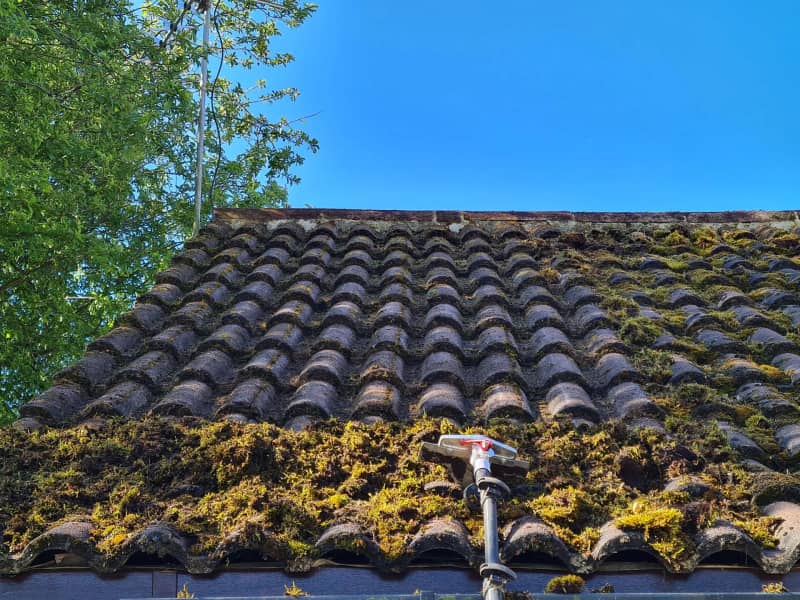
Moss on roof tiles is common right across the UK's damp climate, and most of the time it is nothing to panic about. A light covering of moss on a sound roof is mostly a cosmetic issue. It is not doing urgent harm, and the roofing trade broadly agrees that moss usually only needs removing when it starts to cause a practical problem.
The point at which moss stops being harmless and starts to matter is when it does one of these things.
-
It blocks drainage
Moss and the debris it traps can clog the gaps between tiles, slow the flow of rainwater down the roof, and wash into your gutters. Blocked gutters then overflow against the walls and fascia, which is where the real damage starts.
-
It traps moisture against the tiles
Moss holds water like a sponge and is slow to release it. Tiles left damp under moss can weaken and turn porous, and over time that constant moisture can crack or lift them. On clay tiles it can even cause delamination, where the surface separates from the body of the tile.
-
It sits on a roof that is already wearing out
On older concrete tiles, a heavy moss load can speed up the wearing away of the surface, and the moisture it holds gives an ageing roof a harder time.
So moss is rarely the disaster some quotes make it out to be, but “harmless” is not the same as “leave it forever”. The honest position is that it depends on how much moss there is, where it is, and how old your roof is.
The decision
When you should remove moss from your roof (and when you can leave it)
Use this as a simple rule of thumb.
Have the moss removed when
- It is thick, spongy or growing in deep clumps rather than a thin green film.
- Lumps of it are dropping into your gutters or you are finding bits of moss in the garden after rain or wind.
- Your gutters or downpipes are overflowing, which suggests moss and debris are blocking the flow.
- You can see tiles that are lifted, slipped or cracked, which moss can both cause and hide.
- The growth is heavy on a north-facing or shaded slope, where it spreads fastest.
- Your roof is getting on in years and you are trying to get the most life out of it.
You can usually leave it when
- It is a light, thin covering on an otherwise sound roof.
- Your gutters are running clear and there are no signs of blocked drainage.
- The roof is relatively young and in good condition.
If you are not sure which side of the line your roof is on, that is exactly the point where it is worth a roofer taking a proper look rather than guessing from the ground.
On the “remove it” side, or genuinely not sure?
We will come out, take a proper look and tell you honestly whether it needs doing. No pressure, no hard sell.
A fair worry
Does removing moss damage roof tiles?
This is the worry that stops a lot of people, and it is a fair one. The answer is: only if it is done badly.
Moss removal damages tiles when it is rushed or done with the wrong method. Aggressively scrubbing or scraping strips the protective surface off the tile. Walking around on old, brittle tiles cracks them. And blasting the roof with a pressure washer (more on that below) can break tiles, strip their coating and force water underneath.
Done properly, it does no harm at all. The method we use is careful manual removal by hand, working off ladders or a tower rather than standing on the tiles, lifting the moss away without gouging the surface, followed by a biocide treatment that kills off the spores you cannot see. No force, no high pressure, no unnecessary foot traffic on the covering.
That is the method we use on every roof, and it is the same method we would use on a roof we had just fitted ourselves.
The right way
How moss should be removed safely (and why we never jet or pressure wash)
There are really two jobs in cleaning a mossy roof: getting the existing moss off, and stopping it coming straight back.
Getting it off
The moss is removed by hand, scraped and lifted off the tiles carefully, working from ladders or a scaffold tower. It is slower than blasting it, but it is the only way that does not risk the tiles.
Keeping it off
Once the roof is clear, a biocide treatment is applied. This soaks into the surface and kills the moss, algae and lichen spores that are too small to see, which is what stops the green coming back within months. A treated roof typically stays clear for several years.

A clean that looks impressive on the day can quietly take years off your roof. We do it the slow, safe way on purpose.
Why we never pressure wash or jet wash
This is the single most important thing to understand if you are hiring someone to clean your roof. Pressure washing looks dramatic and gets quick results on video, but UK tile manufacturers and the roofing trade body are united against it.
-
The National Federation of Roofing Contractors (NFRC) advises that high pressure can damage tiles and reduce their service life, and warns that many moss “services” rely on violent methods such as power washing, often made worse by walking on the roof.
-
Tile manufacturers including Marley and the Roof Tile Association advise against jet washing because the high-pressure spray erodes the tile surface and shortens its lifespan.
-
High pressure also forces water up under the laps and into the roof, which can soak felt, battens and insulation and lead to leaks.
Protecting your cover
Will removing moss void my roof warranty?
Done correctly, no. Done with a jet wash, it can.
Several tile manufacturers warn that pressure washing damages the tile surface and can invalidate the product guarantee. So the real risk to your cover is usually how a roof is cleaned, not the moss itself.
This is one of the reasons we will not pressure wash. Most of the roofs we clean are roofs we fitted and still guarantee, so using a method that could damage the tiles and void the guarantee would make no sense for us or for you. Cleaning the roof the right way protects both the roof and any warranty on it.
Who should do it
Should you remove moss yourself, or hire a roofer?
Be honest with yourself about the risk first. The trade bodies, including the NFRC and Marley, advise homeowners not to climb up to clear moss at all, because a fall does far more harm than moss ever will. The safest check you can do yourself is a visual one from the ground. Anything that needs access at height is best left to a roofer with the right equipment, who works from a tower or ladder and never stands on the tiles. Roofs are not built to be walked on, and most roof injuries come from a slip or a ladder over-reach, not the moss itself.
It is worth bringing in a roofer when the moss is heavy, the roof is high or steep, the tiles are old or fragile, or you simply do not want to be up a ladder. The bigger advantage is not the cleaning itself, though. A roofer up on the roof can see what the moss is hiding: a slipped tile, a worn ridge, a failing valley, the early signs that an older roof is on its way out. That assessment is often worth more than the clean.
If you would rather have it looked at properly, we will come out, tell you honestly whether the roof needs cleaning at all, and flag anything else we spot while we are up there.
Rather not go up a ladder? Call us on 0161 566 7522 for a free look.
Keeping it clear
How to stop moss growing back on your roof
Moss thrives on damp and shade, so prevention is mostly about keeping the roof dry and the surface inhospitable.
- Keep the gutters and downpipes clear so water drains away and does not sit against the roof edge.
- Cut back overhanging branches. More sunlight and airflow means a roof that dries out faster and grows less moss.
- Have a biocide treatment applied after a clean. This is the single most effective step, and it is what keeps a roof clear for years rather than months.
- Consider copper or zinc strips along the ridge. When it rains, the metal releases trace particles that run down the slope and discourage regrowth. They work best fitted to a clean roof.
- Have the roof checked every few years, especially on shaded, north-facing slopes where moss returns first.
None of this stops moss forever, but it turns a roof that needs cleaning every couple of years into one that stays clear for far longer.
Quick answers
Moss on roofs: frequently asked questions
Is moss on a roof actually a problem?
Often it is purely cosmetic. It becomes a real problem when it blocks gutters and drainage, holds moisture against the tiles, or grows on a roof that is already ageing. On a sound roof, a light covering is rarely urgent.
Does moss damage roof tiles?
Indirectly, yes. Moss holds water against the tiles, and that constant damp can weaken them, make them porous, and over time crack or lift them. On clay tiles it can cause delamination, where the surface separates from the body of the tile, and on older concrete tiles it speeds up surface wear.
Can I just leave the moss on my roof?
On a sound roof with clear gutters, a light covering can often be left and monitored. You should act when the moss is thick, dropping into the gutters, blocking drainage, or sitting on an older roof.
Does moss mean I need a new roof?
Usually not. Moss on its own is not proof a roof is finished. But heavy moss on an old roof can be a sign the covering is near the end of its life, so it is worth having it assessed.
Does removing moss damage the tiles?
Only if it is done badly. Aggressive scrubbing strips the protective surface and walking on brittle tiles cracks them. Done properly, with careful hand removal, a biocide treatment and minimal foot traffic, it does no harm.
Can you pressure wash or jet wash a roof to remove moss?
You should not. UK tile manufacturers and the NFRC advise against it. High pressure strips the protective coating, can crack tiles, forces water up under the tiles, and can void your tile warranty.
Will removing moss void my roof warranty?
Done correctly, no. Done with a jet wash, it can. Many tile manufacturers warn that pressure washing damages the tile and can invalidate the guarantee, which is one reason we never use it.
Should I remove the moss myself or hire a roofer?
The trade bodies, including the NFRC and Marley, advise homeowners not to get up on the roof to clear moss themselves, because a fall does far more harm than the moss would. Keep your own checks to a visual one from the ground, and leave any work at height to a roofer with the right equipment, who can also spot the underlying damage moss often hides.
Is moss worse on a north-facing roof?
Yes. North-facing and shaded slopes get the least sun and dry out slowest, so moss, algae and lichen take hold there first and grow back fastest.
How often should a roof be treated for moss?
After a proper clean and biocide treatment, most roofs stay clear for several years. A light re-treatment every few years keeps it from returning.
How much does roof moss removal cost?
It depends on the size and pitch of the roof, access, and how heavy the growth is. We set out our per square metre rates on our roof cleaning page.
Does a mossy roof affect selling my house?
It can, and not just on kerb appeal. At survey a heavy moss build-up can be flagged, and can even limit how much of the roof the surveyor is able to inspect, which raises questions for buyers. Clearing it before listing helps the look and removes that doubt. And if you are the buyer, it cuts the other way: a heavily mossed roof is a good reason to look at your options for a roof survey when buying a house.
Qualified, Insured and Local
-
CORC Accredited Member

-
CITB Certified

-
City & Guilds

-
NFRC Competent Person

-
NWRTG Member

-
NVQ Qualified



Rated 5 stars by 49 homeowners. Read our Google reviews.
Free, honest, no pressure
Not sure if your roof needs cleaning? We will tell you honestly.
We cover Stockport, the surrounding suburbs and East Cheshire. We will come out, take a proper look, and tell you straight whether your roof needs cleaning, whether it can wait, and whether there is anything else worth knowing while we are up there. No pressure, and no hard sell.
- An honest yes or no on whether it is worth doing
- Hand removal and biocide only, never a jet wash
- A real local roofer, not a pressure-washing crew
Enquiry Sent!
Thank you. We'll be in touch shortly, usually the same working day.
Need us sooner? Call 0161 566 7522
Something Went Wrong
We couldn't send your enquiry. Please try again or contact us directly.