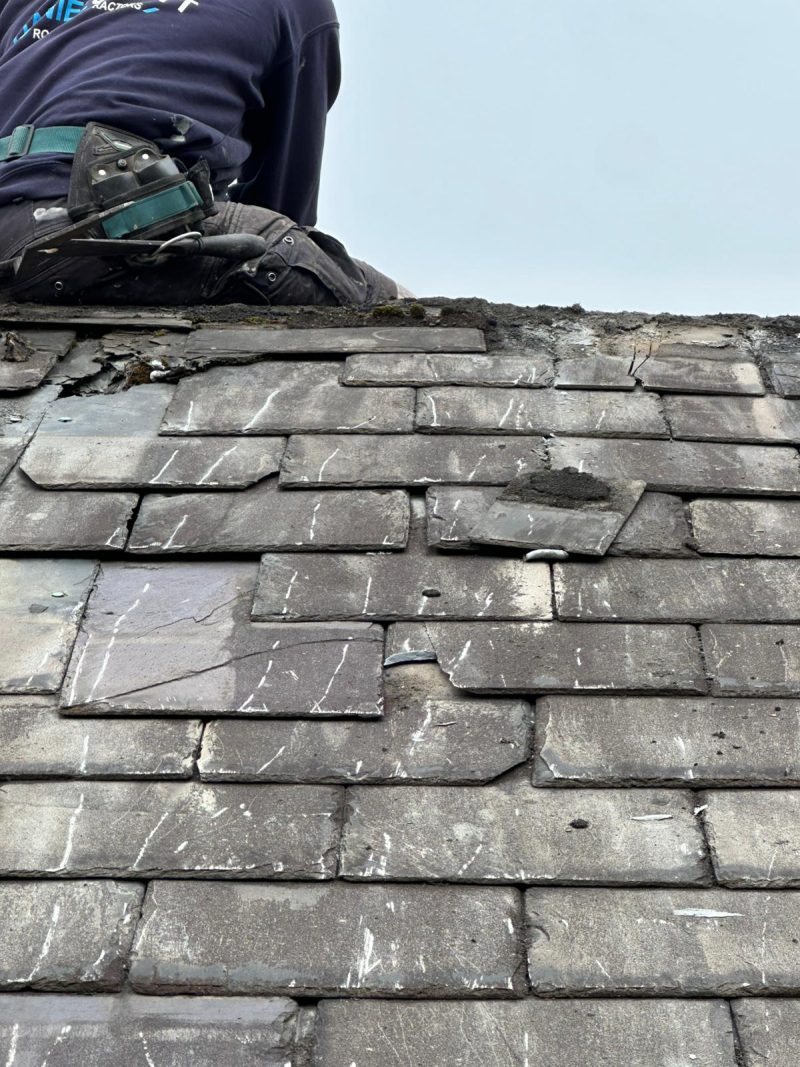
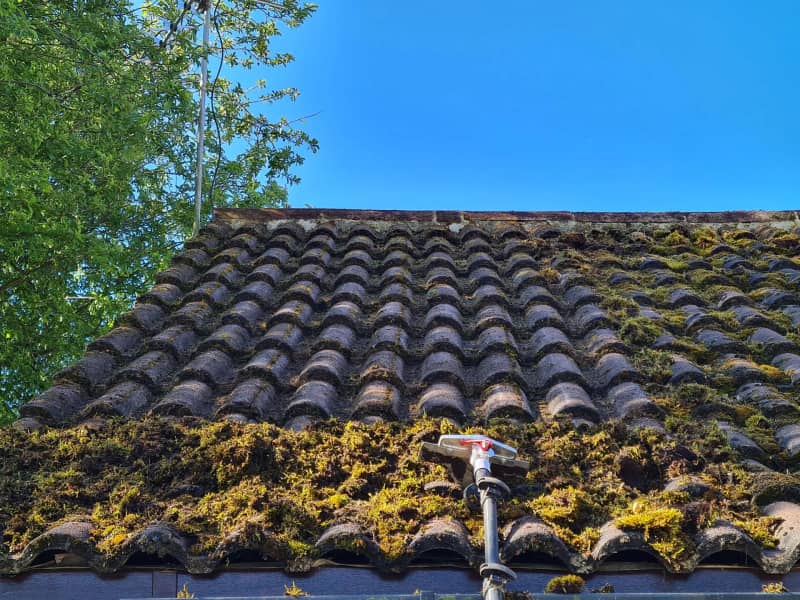
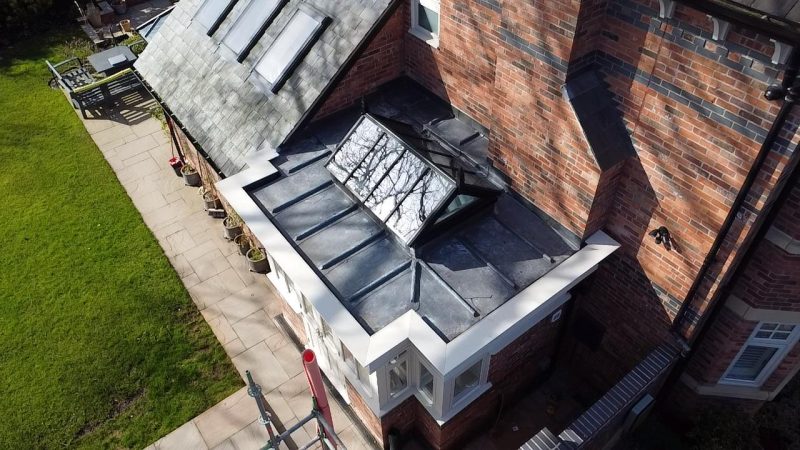
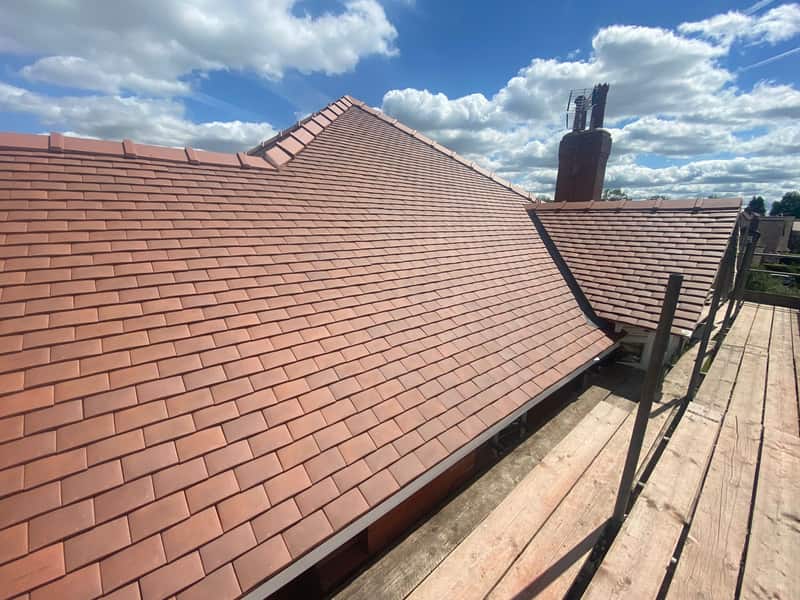
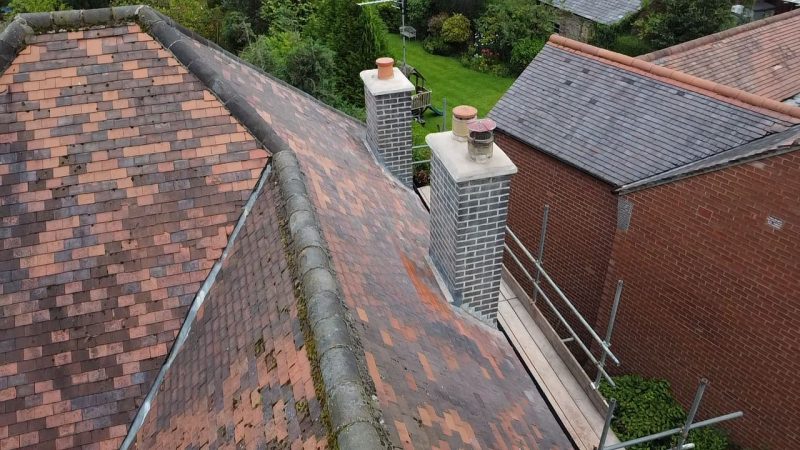
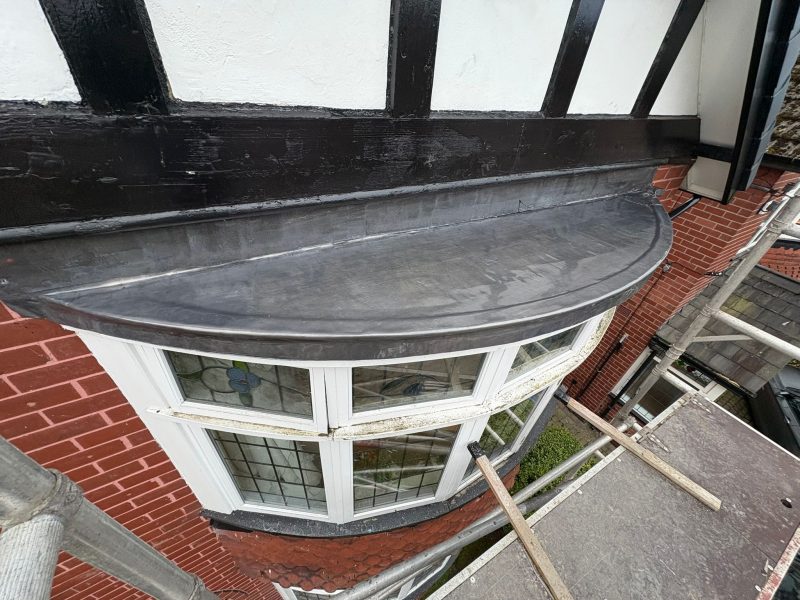
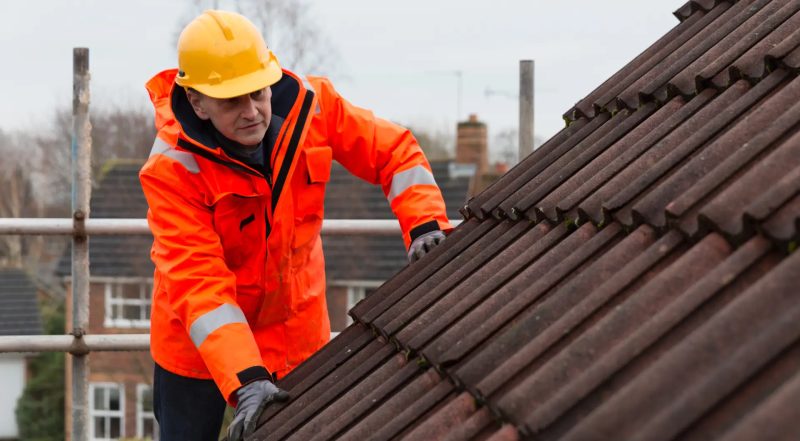
Roof repair in progress on a Stockport property

Roof Repairs & Leak Detection in Stockport & East Cheshire

Leaking roof? Slipped tile? Storm damage? A leak no one else has been able to find? Stop the leak, guaranteed.
We carry out roof repairs and leak detection across Stockport, Marple, Bramhall, Cheadle Hulme, Hazel Grove and Poynton, tracing the source, not just the symptom. Same-day or next-day emergency response.

Rated 5 on Google, 45+ verified reviews

Why Choose Daniel Scott as your Roof Repairs & Leak Detection Specialists?

  • Fully Qualified Team
  • Leadwork & Conservation Area Specialists
  • Family-Run, In-House Team
  • Head Office Always Contactable
  • Local Stockport Team
  • 5-Star Google Reviews

How Roof Leaks Actually Work. And Why So Many Repairs Fail

Most of the roof repair calls we get across Stockport, East Cheshire and Greater Manchester start the same way: water coming through a ceiling, a damp patch that's spreading, and one or two other roofers who've already had a go without fixing it. Whether you're in Bramhall, Cheadle Hulme, Marple, Hazel Grove, Poynton or anywhere in the SK postcodes, the underlying problem we trace is almost always the same.

The reason those earlier repairs didn't hold comes down to a single fact lost on a lot of people doing this work: water doesn't enter a roof directly above the spot where it shows up indoors.

Why the Ceiling Stain Isn't Above the Real Leak

Once water gets past the tiles or slates, it doesn't drop straight down. It runs along battens, follows the line of a rafter, tracks across the underlay until it finds a nail hole or a tear, and only then drops onto your ceiling, sometimes a metre or two from where it actually came in.

A roofer who takes a quick look in the loft, sees a wet patch on the felt, and replaces a tile directly above it has almost always missed the real problem. The repair holds for a week or two while the weather's kind, then the leak comes back.

Your Roof Is a System, Not Just a Covering

A roof isn't just the bit you can see from the street. It's a system of layers that all depend on each other:

  • Tiles or slates, the visible weather covering
  • Underlay, bituminous felt or modern membrane beneath, the second line of defence
  • Battens, the timber rails tiles are nailed to
  • Deck and rafters, the structural timber underneath
  • Flashings, lead or metal where the roof meets walls, chimneys, valleys
  • Drainage, gutters, downpipes and valleys taking water off the roof

Diagnosing a leak properly means understanding where every one of those layers can fail, and tracing the path the water has actually taken. That's what we do, and it's why every repair survey ends with a written report and photographs of what we've found, before we quote you anything.

Where Roof Leaks Actually Start. The Most Common Entry Points:

  • Slipped, cracked or porous tiles - Old concrete tiles go porous as their surface coating breaks down. Clay tiles crack from frost. Slates slip when the nails corrode through, what's called "nail corrosion." A single missing tile can let in surprising amounts of water, especially in driving rain off the Pennines.
  • Failed underlay - The bituminous felt under your tiles is the second line of defence. On any roof over thirty years old, the underlay is often the thing that's actually keeping you dry, and when it perishes, splits, or pulls away from the eaves, you'll get water ingress even when every tile looks perfect from the ground.
  • Failed mortar bedding on ridge tiles - Ridge tiles sit along the apex of the roof, traditionally bedded in mortar. The bed cracks with thermal movement, frost gets into the cracks, and bit by bit the bond breaks down. Mortar fragments on the path after high wind is one of the earliest warning signs.
  • Lead flashings and abutments - Where your roof meets a wall, a chimney stack, or another roof, lead flashings handle the join. Lead fatigues over time. The pointing that holds it into the brickwork crumbles. Splits open at the folds. One of the most common sources of persistent leaks we trace.
  • Chimney stacks and flaunching - The mortar weatherings on top of a stack go first, then the pointing, then the flashings around the base. Damp running down a chimney breast is almost always one of these three.
  • Valley joints - Where two roof slopes meet, you get a valley, usually lead, sometimes lined with cement filets on older property. Valleys collect everything: leaves, moss, debris. Blocked valleys back water up under the tiles. Cracked lead valleys leak directly onto the ceiling below.
  • Flat roof failures on extensions, garages and dormers - Splits at upstands, ponding water, blistered felt, lifted edges. Different repair approach to a pitched roof, covered in detail on our flat roof page.
  • Gutters, fascias and soffits - Blocked downpipes overflow back onto the wall and saturate the masonry. Rotten fascias let water track in under the eaves. Roof problems from below the tile line are easy to miss but cause real damage.

Warning signs you need attention now

  • Damp patches, yellow staining, or tide marks on ceilings or upstairs walls
  • Stains that grow after every spell of rain
  • Daylight visible through the roof when standing in the loft
  • Slipped, cracked, or missing tiles, particularly after high winds
  • Granules of grit or sand collecting in your gutters (concrete tile breakdown)
  • Mortar fragments on the path or driveway after wind
  • Black staining or thick moss growth on north-facing slopes
  • A musty smell in the loft, even on dry days
  • Crumbling pointing on the chimney stack or visible cracks in the flaunching
  • Lead flashings lifted, split, or pulled away from a wall, chimney, or abutment
  • Sagging ridge line or soft spots under foot when walking the loft boards
  • Water pouring over the front of the gutter rather than down the downpipe

Roof Repair Services We Carry Out Across Stockport & East Cheshire

Every repair we quote starts with a proper diagnosis. That means walking the roof where it's safe to, inspecting the loft, and tracing the leak back to its actual entry point, not the symptom. You'll get a written report with photographs of what we've found, then a clear quote covering exactly what needs doing. No hard sell, no scope creep once we've started.

  • Leaking Roof Detection & Repair

    Some leaks announce themselves clearly. A tile down after a storm, a split in a lead apron, an obvious crack in the chimney flaunching: these we can usually pinpoint on the first survey and price up the same day.

    Then there are the awkward ones. The leak that only shows up in heavy rain. The damp patch that moves around the room. The one two other roofers have already “fixed” twice, and it keeps coming back.

    Tracing these is its own discipline, and it's where we differ from most of the trade. We inspect the roof externally first, then go through the loft systematically with a torch, looking for the trail water leaves on rafters, battens and underlay. Where access allows, we'll get on the roof itself. On stubborn or complex jobs, we'll run a hose test: controlled water across different sections of the roof while watching the loft for where it appears.

    The diagnosis goes into a written report with photographs, and we'll walk you through it before quoting. See our full process for what that looks like step by step. If the source of the leak turns out to be a flat roof, see flat roof & garage roof repairs below, different system, different approach.

  • Same-Day Leak Stop

    Got a Leak? We Stop It Today.

    Call us and we'll make your roof watertight the same day, guaranteed dry while you wait. If the leak returns before the full repair is finished, we come back free of charge. The first job is stopping the water: a temporary tarp where the covering's been breached, a secured ridge if tiles have come loose, a capped chimney if a pot's gone, or sealed flashings if there's an active drip into the loft. Beyond the immediate weatherproofing we trace the source, scope the proper fix, and quote it honestly. If a repair will hold for the long term, we'll tell you; if the roof is genuinely at the end of its life and a repair is throwing money at a lost cause, we'll tell you that too. Response is usually same or next working day across Stockport, Marple, Hazel Grove, Poynton, and Wilmslow.

    If the damage came from a storm and you'll be claiming on insurance, see storm damage roof repairs & insurance claims below for how we handle that side of it.

    Call Now 0161 566 7522
  • Missing & Broken Tile Replacement

    The most common repair we carry out, and one that gets put off too often. A single slipped tile or cracked slate is a hole in the roof. Water reaches the underlay, then the battens, then over time the timber structure itself. Left long enough, what could've been a £150 fix becomes a major repair.

    We carry concrete tiles, clay tiles, and reclaimed slates to match what's already on your roof. On older property, particularly the Edwardian and Victorian terraces across the Heatons, Edgeley and the conservation areas of Marple, getting the slate match right matters as much for how the finished job looks from the street as for the watertightness of the repair. On heritage and listed property, our new roofs and re-roofing service covers the consent and material-matching side of it.

    If we're up there for one tile and we spot half a dozen others on the way out, we'll show you the photographs and let you decide. Honest fix, no upsell, but no leaving things we know are about to fail either.

    Where the damage is widespread enough that ongoing tile-by-tile repairs no longer make financial sense, we'll be straight with you about it. See our roof replacement page for the full re-roof side of things.

  • Ridge Tile Repair & Re-pointing

    Ridge tiles sit along the apex of the roof, traditionally bedded in a sand-and-cement mortar. The mortar bed is the weak point: it cracks from thermal movement, frost gets into the cracks, and bit by bit the bond breaks down. The first sign is usually mortar fragments on the path or driveway after wind. Eventually a ridge tile slips, lifts, or comes off entirely, and once that happens, the gap underneath is one of the largest water entry points anywhere on the roof.

    We carry out two types of work here. The first is re-bedding existing ridge tiles, lifting them, cleaning off the old mortar, and re-bedding in fresh mortar with a proper weather seal and pointing. This is the right answer when the ridge tiles themselves are sound and the structure's solid.

    The second is upgrading to a dry ridge system, mechanically fixed ridge tiles with no mortar at all. Dry ridge meets current British Standards (BS 5534), doesn't crack the way mortar does, won't need re-pointing in fifteen years' time, and is now the standard finish on any new-build or full re-roof. On most properties built before about 2015 the ridge is still mortar-bedded, and the upgrade is one of the most cost-effective long-term improvements you can make to an older roof.

    We'll talk you through both options at survey and price each so you can compare.

  • Roof Flashing Repair

    Where the roof meets a wall, a chimney, another roof, or the side of an extension, lead flashings handle the join. They're also the most common source of persistent leaks we trace, and the part of the roof cheap repair quotes tend to skim past.

    We carry out the full range: replacement step flashings on chimneys and abutments, lead aprons, back gutters and soakers, valley re-leading, and full re-flashing where existing leadwork's reached the end of its life. Where the existing lead is salvageable, we'll re-dress it and re-point. Where it isn't, we replace in the correct lead code (thickness) for the application, typically code 4 for soakers, code 5 for step flashings and valleys, code 6 for back gutters and chimney aprons. Going under-spec on lead grade is one of the main reasons cheap flashing repairs come back within a few years. For full leadwork specs and bay-roof leadwork, see our lead services page.

    Flashing work and chimney work are usually quoted together, the leadwork around a chimney depends on the brickwork it's keyed into, and vice versa. See chimney repairs below for that side of it.

  • Chimney Repairs

    Chimney stacks take more weather than any other part of the roof. They're exposed on all four sides, they're full of joints, pointing, flaunching, flashings, pot fittings, and every one of those joints is a potential point of failure.

    We carry out: re-pointing of crumbling mortar joints (a major cause of damp running down a chimney breast), re-flaunching of the mortar weatherings on top of the stack, pot replacement for cracked or loose pots, lead tray installation to handle internal damp travel through the stack, and full chimney rebuilds where the brickwork itself is too far gone for cosmetic repair. The full range of stack work is detailed on our dedicated chimney services page.

    If your chimney's leaking through several different routes at once, we'll have an honest conversation about whether a rebuild makes more financial sense than ongoing patches. A patched chimney that leaks again the following winter is dead money.

    Chimney work nearly always involves leadwork, see roof flashing repair above for how the two interact. For unused or redundant chimney stacks, removal is also an option we can quote separately.

  • Storm Damage Roof Repairs & Insurance Claims

    Storm damage doesn't follow a schedule. High winds across Stockport and the foothills of the Peak District take tiles, lift ridge sections, and bring down chimney pots, sometimes all in the same night. The impact spans pitched roofs, flat roofs, fascias and gutters, and we handle the lot.

    The repair side is straightforward: emergency make-safe first (see emergency roof repairs), full inspection second, permanent fix third.

    The insurance side is where most people lose time and money. Most home insurance policies cover storm damage but exclude general wear and tear, and the line between the two is exactly where claims get argued. We provide a written diagnostic report with photographs in the format insurers ask for, an itemised repair quote, and, where it helps, independent confirmation that the damage is consistent with the storm event rather than pre-existing. We've worked with most of the major insurers and we know what they want to see.

    For disputed claims or cases where a more detailed structural assessment is needed, we also provide formal insurance and expert-witness roof reports as a separate service.

  • Flat Roof & Garage Roof Repairs

    Flat roof leaks behave differently to pitched roof leaks. Water doesn't track far across a flat surface, but the failure points are different, and the repair approach is different too.

    The common ones: splits at the upstand around an extension, blistered felt that's perished in the sun, ponding water that's broken down the surface coating, lifted edges where the original detailing was poor, and seam failures on older felt systems.

    We repair all the main systems: high-performance felt, EPDM rubber, and GRP fibreglass. Sometimes a repair is the right call. Sometimes the system has had its life and you're throwing money at a roof that needs replacing, and we'll tell you straight which is which.

    For more on flat roof systems, replacement options, and the warm-deck construction we use on extensions, see our dedicated flat roofing page.

What our customers say

  • ★★★★★

    “Dan's knowledge, candour and honesty are top notch. He helped identify issues with our roof that others completely missed, giving us a really clear understanding of the state and realistic life span of the roof. As a result he actually talked me out of doing more work, due to the limited life it would have against the rest of it, suggesting I save my money to have it all done properly in the future when we need to. He was always extremely helpful in making sure the work was done to a high standard.”

    Phil Somerville

    Google Review, Marple

  • ★★★★★

    “We had several broken tiles on a ground floor roof causing a leak in our utility. Our gable end undercloaking board was also failing and becoming a hazard in high winds. We had great service from Daniel Scott Roofing, Dan was quick to assess the damage and gave a clear, competitive quote on the repairs needed. They completed the repairs promptly and professionally with good communication throughout, would definitely recommend!”

    Peter

    Google Review, Romiley

  • ★★★★★

    “Excellent, very professional service. I contacted Daniel regarding a leaking valley above my bay window which myself and others had tried to repair without success. He got back to me within an hour, came and looked at the job and explained what he thought was needed to resolve the problem, then sent a quote within a few days which I was happy with. The job was completed shortly after. Excellent communication from start to finish, first rate tradesmen and would definitely recommend.”

    Chris Wood

    Google Review, Bredbury

Accredited & Qualified

  • CORC Accredited Member Confederation of Roofing Contractors accredited member
  • CITB Certified CITB Construction Industry Training Board certified
  • City & Guilds City and Guilds qualified roofers
  • NFRC Competent Person NFRC Competent Person Scheme registered roofer
  • NWRTG Member North West Independent Roof Training Group member
  • NVQ Qualified NVQ qualified roofing team

Get a Free Quote for Roof Repairs & Leak Detection

Call, email, or fill in the form. We'll get back to you with a free written quote, usually the same day.

Address

G6 Hallam Mill, Hallam Street,
Stockport, SK2 6PT

Please enter your full name.
Please enter a phone number.
Please enter a valid email address.
Project Type
Please describe your project.

Your details are safe. We never share them with third parties.