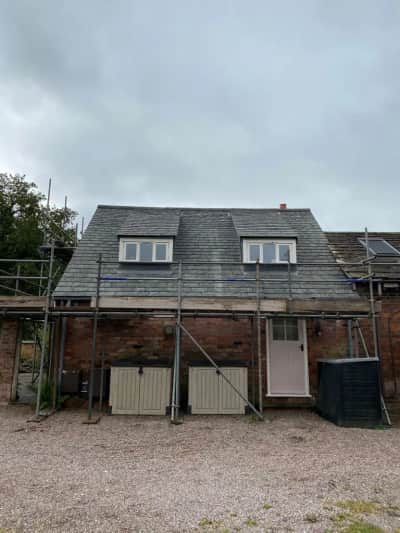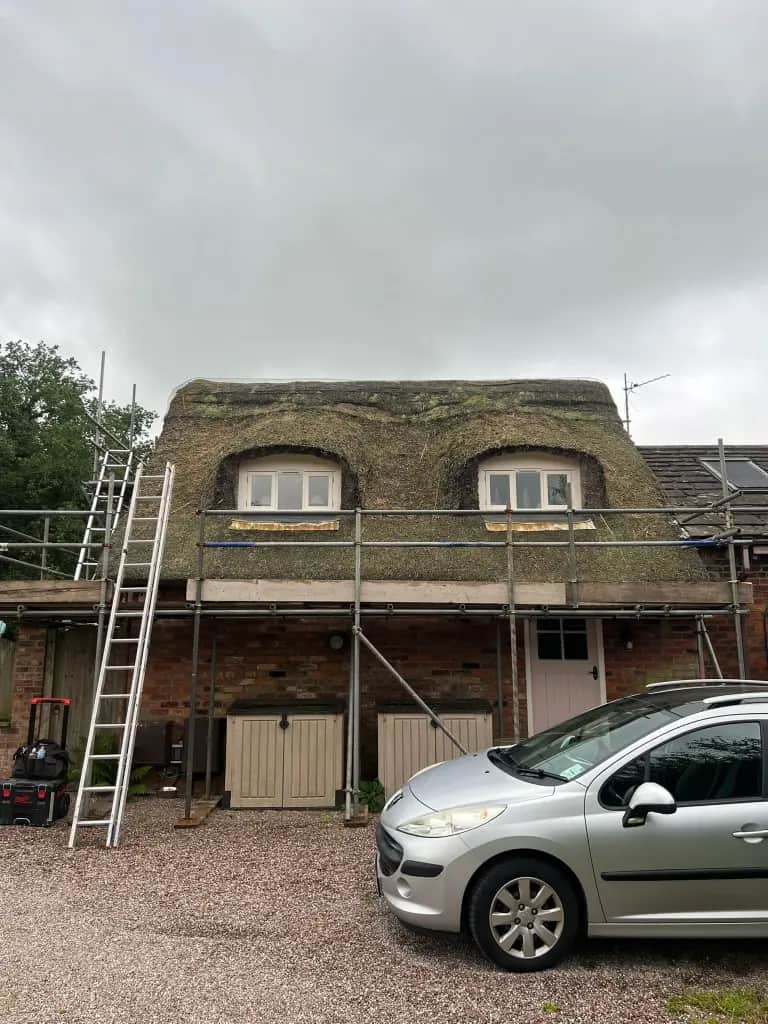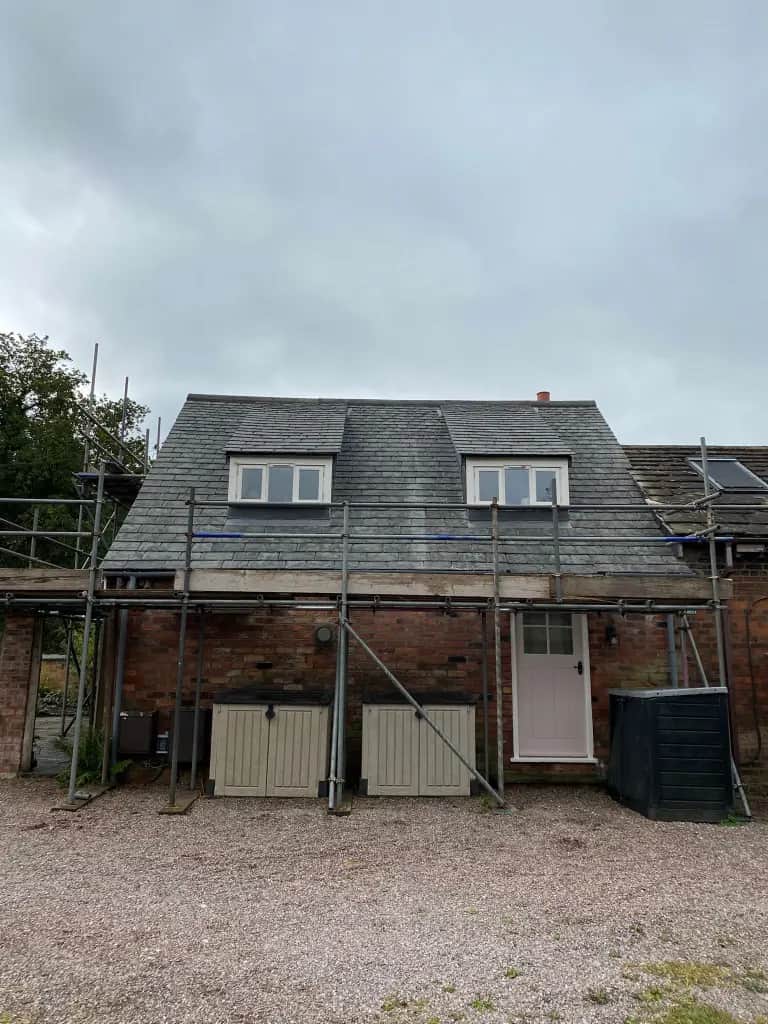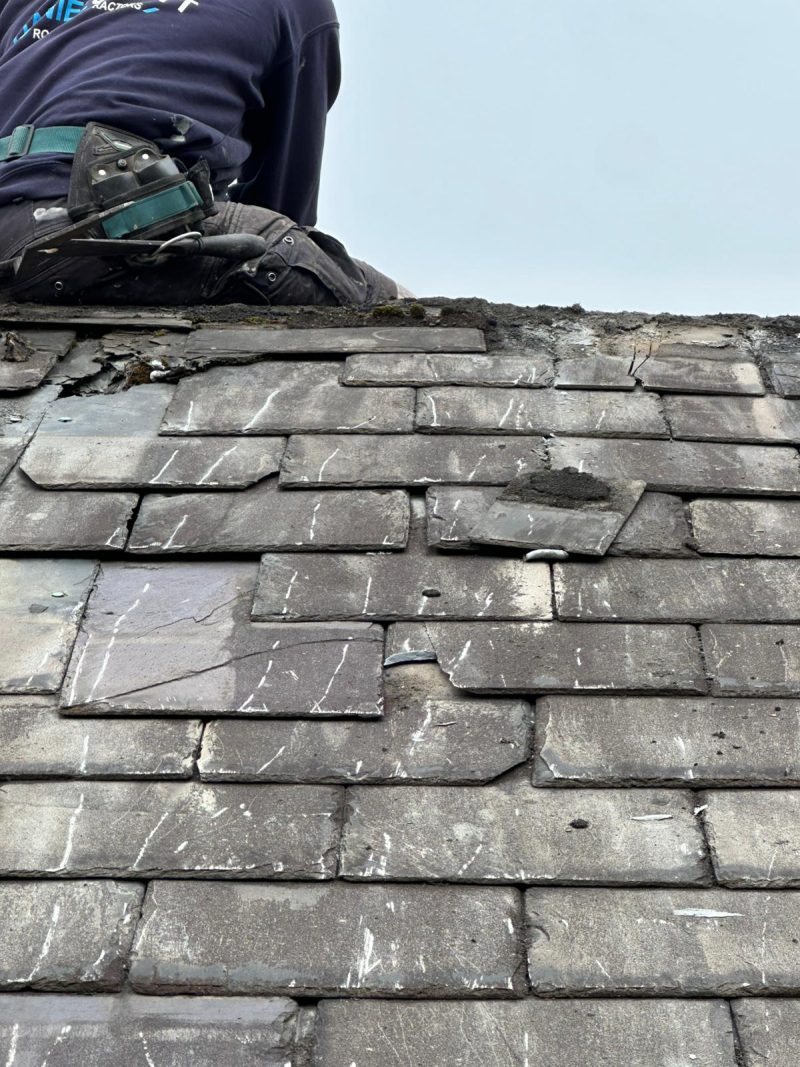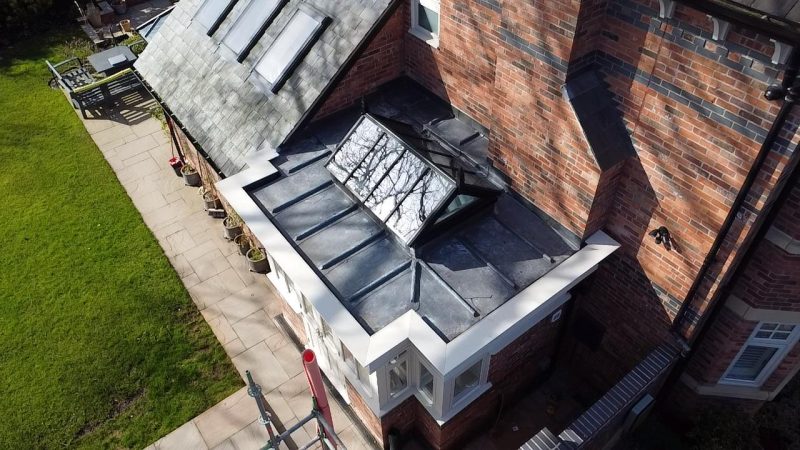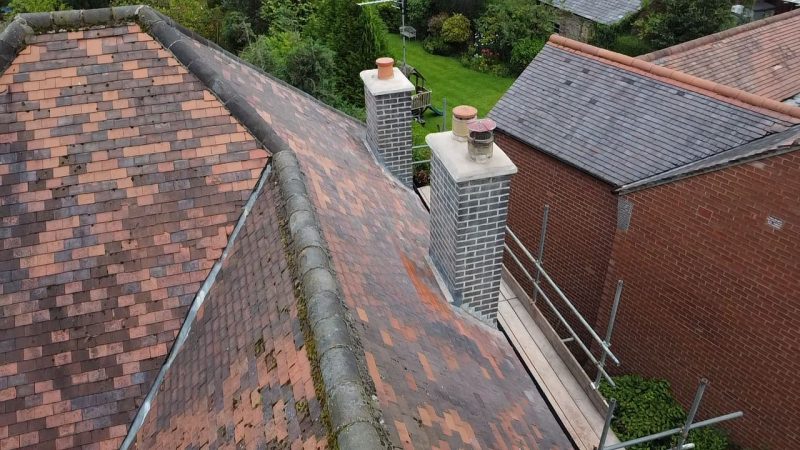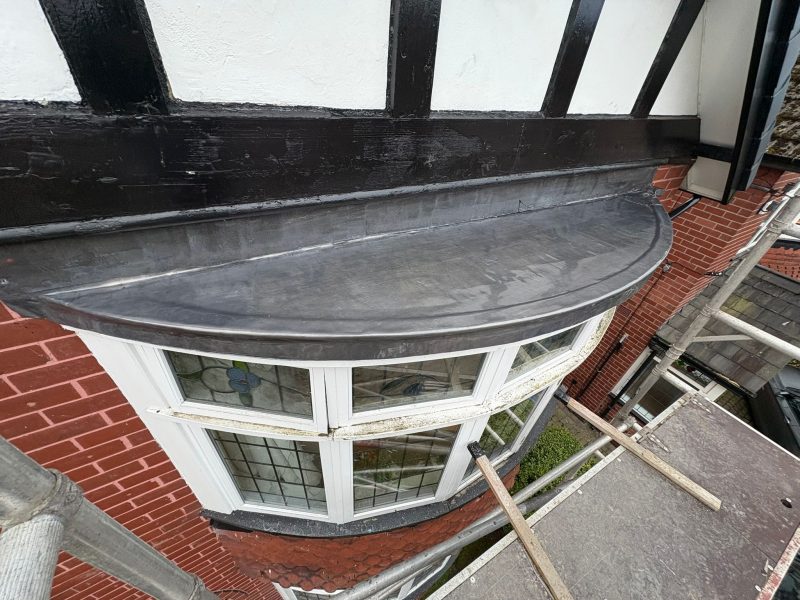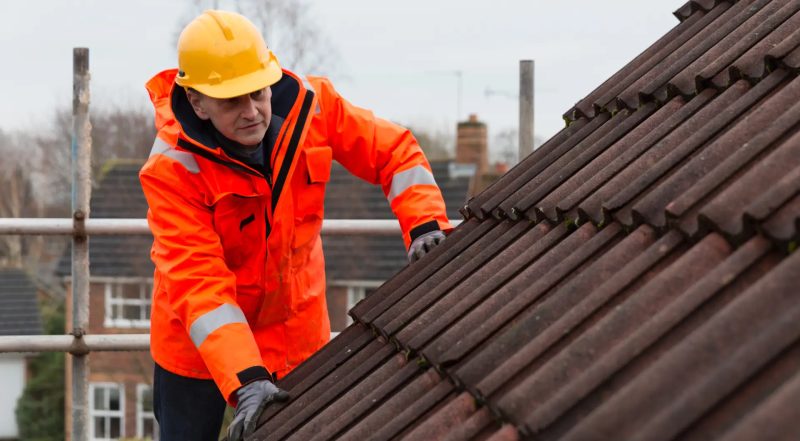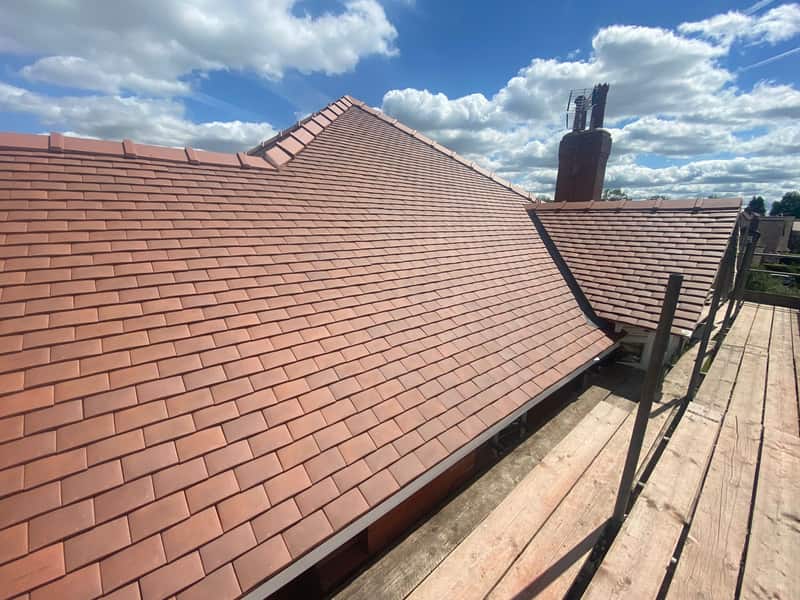
New roof installation in Bramhall, Stockport

New Roofs & Re-Roofing in Stockport & East Cheshire

Slipped tiles? Crumbling mortar? Damp ceilings? We strip and re-roof terraces, 1930s semi-detached houses, detached homes and period properties across Stockport & East Cheshire. We work with slate, tile, and reclaimed stone, fitted with modern breathable membranes. Replace once. Built to last decades.

Rated 5 on Google, 45+ verified reviews

Why Choose Daniel Scott as your New Roofs & Re-Roofing Specialists?

  • 10+ Year Workmanship Guarantee
  • Fully Insured
  • Building Regs Handled
  • Insurance-Backed Guarantee
  • Local Stockport Team
  • 5-Star Google Reviews

Why Roofs Fail. And When Repair Stops Being an Option

If you've patched the same leak twice or paid for slipped tiles a third time, the roof is telling you something. Most pitched roofs in Stockport and East Cheshire last 50–80 years, natural slate at the longer end, concrete tile at the shorter, and once they're past it, ongoing repairs stop being economic.

We carry out full roof replacements and re-roofing across Stockport, Bramhall, Cheadle Hulme, Marple, Hazel Grove and Poynton: stripping back to the rafters, replacing rotten timber where we find it, installing modern breathable membranes, and giving the ridges, valleys and abutments the careful detailing that determines whether a new roof lasts 60+ years or fails inside 10.

We're happy to come out, take a proper look, and give you a straight answer. If the roof has years of life left in it, we'll say so. If it needs a repair rather than a full replacement, we'll tell you that too. We'd rather lose the job to honesty than take on work that doesn't need doing.

Enquire Today

If it's only a flat section of the roof that's failing, a kitchen extension, garage, or dormer, that's covered by our separate flat roofing service. For smaller jobs like single slipped tiles, ridge re-pointing, or storm damage, see our roof repair page. And for listed buildings or homes in Stockport's conservation areas, we'll walk you through the planning and material requirements as part of the free quote.

The Most Common Causes of Pitched Roof Failure:

  • Nail corrosion - The iron nails holding slates in place corrode and lose their grip. Slates start slipping faster than they can be replaced, and once it begins it usually spreads across the whole roof within a few years.
  • Perished mortar bedding - The mortar holding ridge tiles, verges, and hip tiles dries out and crumbles. Tiles work loose at the most exposed points of the roof, and individual repairs become an annual job.
  • Underfelt failure - The bitumen felt sitting beneath the tiles becomes brittle and tears. The secondary waterproof barrier you can't see is the one doing most of the work in heavy rain; once it's failed, the visible roof above it cannot guarantee your roof is completely watertight. On properties over 70 years old, there's often no felt there at all. It wasn't standard practice when they were built.
  • Lead flashing failure - Around chimneys, abutments, and valleys, lead flashings split, lift, or work loose. These are the points where most leaks originate, and where badly-detailed previous work shows up first.

Warning signs your roof needs replacing

  • Multiple slipped, broken, or missing tiles or slates, not just one or two, but across the roof
  • Damp patches on upstairs ceilings or walls, particularly directly below the roof
  • Daylight visible through the roof boards from inside the loft
  • Crumbling mortar at ridges, verges, or around the chimney
  • Sagging or dipping along the roofline, visible from across the road
  • Ridge tiles loose, wobbling, or out of line
  • Multiple leaks in different parts of the house, with new ones appearing as old ones are fixed
  • A roof over 50 years old that has never been fully replaced

What our customers say

  • ★★★★★

    “We are really happy with our new roof and the work Dan and his crew carried out. The working conditions were tough on the lads as space was tight and some hefty roadworks were taking place outside too. Nevertheless, Dan's team were always understanding, flexible and hard working. We've already had some neighbours asking who we used as they like what they have seen and I have had no hesitation in recommending Daniel Scott Roofing for anyone needing a roofer in Bramhall.”

    David Marsland

    Google Review, Bramhall

  • ★★★★★

    “I had a completely new roof installed by Dan and his team at my mother's house. From pricing to completion was a flawless experience. Dan's team were excellent, very polite and courteous to my mother and cleaned up at the end of each day. The team also made sure that my mother knew they were leaving for lunch or at the end of the day so she could make the house secure. They are a very good company to deal with and I wouldn't hesitate to recommend them to friends and family. Five star company well done guys and thanks again for a job well done.”

    Gary Pinder

    Google Review, Cheadle Hulme

  • ★★★★★

    “Daniel Scott Roofing completed a total re-roof of my old bungalow in 2024, including new gutters, downpipes, fascias, plus additional work inside the roof space, and I am very pleased indeed with the results. I have no hesitation in recommending Daniel Scott Roofing to anyone with roofing needs. Communications throughout were very good, Daniel responded promptly to queries. His team(s) worked conscientiously, they were always polite and tidied up as they went along. The final result looks great. As the company is a member of CORC I was able to obtain an insurance-backed guarantee for the work, in addition to Daniel Scott's own 10-year guarantee.”

    Brenda Hooper

    Google Review, Hazel Grove

  • ★★★★★

    “Dan and his team have just completed a full re-roof on my 1930s property just in time for winter. It is really difficult to find reliable tradespeople, and I had previously been messed about by a roofer, so coming across Dan restored the faith! He was quick to come and quote, and kept me in the loop throughout while we waited a few months for him to finish other jobs. Dan and his team got the job done efficiently, and within the confirmed quote price. We are really pleased with the final finish, we now have the best looking roof on the street. I would recommend Dan and his team.”

    Benjamin Alves

    Google Review, Poynton

Accredited & Qualified

  • CORC Accredited Member Confederation of Roofing Contractors accredited member
  • CITB Certified CITB Construction Industry Training Board certified
  • City & Guilds City and Guilds qualified roofers
  • NFRC Competent Person NFRC Competent Person Scheme registered roofer
  • NWRTG Member North West Independent Roof Training Group member
  • NVQ Qualified NVQ qualified roofing team

Roofing Systems We Install

  • Full Roof Replacement & Re-Roofing

    • 6–14 day install
    • Building Regs handled
    • All material systems
    • 10+ year workmanship guarantee
    Full strip-and-replace work on properties where the existing roof has reached the end of its life. The process is the same regardless of material: scaffold up, strip the old covering back to the rafters, inspect and replace any rotten timber, install a modern breathable membrane and fresh treated battens, then re-cover in your chosen material with proper detailing at ridges, valleys, abutments, and chimneys.

    This is the work most homeowners need when they're past the point of patching, typically a roof that's 50+ years old, has had multiple repairs in the last few winters, or is showing the failure modes covered above (nail corrosion, perished underfelt, crumbling mortar). Once more than 25% of the existing covering is being replaced, Building Regulations apply. We handle the building control notification on your behalf and upgrade loft insulation to current U-values as part of the work.

    Most semi-detached and terraced re-roofs run six to nine working days from scaffold up to skip away; larger detached homes ten to fourteen. Heritage and structural conversions, thatch-to-tile, or roofs needing new structural rafters, typically run two to three weeks. We programme the work weather-permitting and keep the roof watertight at the end of every day. No tarps left flapping for a fortnight.

    Best suited to

    • Roofs 50+ years old with multiple recent winter repairs
    • Properties showing nail corrosion, perished underfelt, or crumbling mortar
    • Multiple damp patches on upstairs ceilings or walls, where water is bypassing the roof in more than one place
    • Heritage and structural conversions such as thatch-to-tile or new rafter sets
  • Natural Welsh & Spanish Slate Roofing

    • 80–100+ year lifespan
    • Conservation approved
    • New & reclaimed stock
    • Welsh, Spanish & Brazilian
    Welsh and Spanish slate are the gold standard for pitched roofs, and the right material for nearly every period property in our area. Welsh slate, primarily Penrhyn purple-grey and Cwmorthin blue-grey from the historic Snowdonia quarries, is what most Victorian and Edwardian homes in Stockport, the Heatons, Davenport, and Marple were originally roofed with. Spanish slate offers a similar weight and split, slightly different tonal range, and tends to come in at a friendlier price point while still delivering 80–100+ years of life.

    Natural slate isn't just a finish. It's an investment that should outlast its first owner. We work with both new and reclaimed slate; reclaimed is often the right answer for conservation areas like Marple Bridge, Heaton Moor, and Davenport Park, where conservation officers expect a like-for-like replacement that doesn't read as new from the street. Sourcing the right stock takes time, but it's worth doing properly.

    Slate work also rewards detail. The lead flashings around chimneys and abutments, the way ridge slates are bedded, the dressing of valleys: these are where a natural slate roof either lasts a century or fails inside 20 years. We finish slate roofs with dressed leadwork, dry ridge or wet ridge to suit the property, and individually fixed slates at perimeters and exposed positions.

    Best suited to

    • Victorian and Edwardian homes
    • Stockport, the Heatons, Davenport, and Marple terraces
    • Conservation areas such as Marple Bridge, Heaton Moor, or Davenport Park
    • Listed buildings requiring like-for-like replacement
  • Concrete & Clay Tile Roof Installation

    • 30–80 year lifespan
    • Concrete or Clay tiles
    • Marley · Redland · Sandtoft
    • Profile matching
    Concrete and clay tiles cover the majority of post-war housing across Bramhall, Cheadle Hulme, Hazel Grove, Poynton, and the newer estates in Stockport: anything from 1930s semi-detached homes through to 1990s detached. They're cost-effective, durable, and well-suited to the rectangular roofs typical of British suburban housing. The two materials look superficially similar on the roof, but they're very different products, and the right choice depends on budget, how long you plan to stay, and whether the property's character matters.

    Popular

    Concrete tiles

    • 30–50 year lifespan
    • Fully man-made, cement, sand, pigment
    • Surface pigment fades with UV exposure
    • Biocide treatment every 2–3 years
    • Best £-per-square-metre value

    Concrete remains the most popular roofing material on UK housing built since the 1960s. If upfront cost is the deciding factor, or you're unlikely to be in the property for the full life of the next roof, concrete is genuinely the right call. The trade-off is colour and maintenance: the pigment sits at the surface, so tiles fade within the first decade and the substrate becomes progressively more porous as it weathers. A periodic biocide treatment keeps moss and algae from accelerating that surface wear.
    Premium choice

    Clay tiles

    • 60–80 year lifespan
    • Colour fired through the full body of the tile
    • Naturally moss-resistant
    • Stronger, denser, more durable

    Clay is the longest-lasting tile system available. Because the colour runs through the full body of the tile rather than sitting on the surface, it doesn't fade with UV exposure the way concrete does. The denser, less porous body also resists moss and algae naturally, which means far less ongoing maintenance. The modest premium upfront is often the better-value choice on a whole-life cost basis, and the right specification for period and conservation properties where the original character of the street needs preserving.

    Whichever material you choose, we work with the major UK manufacturers (Marley, Redland, Sandtoft, Russell) and can match almost any existing tile profile, from plain tiles through to double Romans, pantiles, and interlocking concrete. Marley Acme single-camber clay tiles are a particularly good match for the heather and brindle palette common across 1930s and 1960s housing in Bramhall, Poynton, and the Heatons. Headlap, batten gauge, and ventilation details are all set to the manufacturer's current specification, not the shortcuts that get used when nobody's checking.

    Best suited to

    • 1930s semi-detached through 1990s detached homes
    • Stockport Borough and Cheshire East
    • Cost-led replacements where concrete delivers the best value-per-£
    • Conservation areas requiring a fired-clay specification
    • Period homes where the original tile character matters
    • Long-stay owners wanting a one-time, lifetime roof
  • Heritage & Reclaimed Stone Roofing

    • Reclaimed stone sourcing
    • Listed building approved
    • Structural review included
    • Specialist trade
    Stone roofing is a different trade from slate or tile, and it's one we particularly enjoy. Yorkshire gritstone, Cumbrian green stone, and the local sandstones of the Peak District fringe make up most of the heritage stone roofs in our area, common across Marple, Marple Bridge, High Lane, Disley, and the older properties of Bollington and the Macclesfield fringe.

    Stone roofs are heavy. The structural calculations alone are different: purlins and rafters need to be sized for 100kg per square metre or more, where slate works to around 35kg/m². The stones are graded by size from eaves to ridge (largest at the bottom, smallest at the top), bedded in mortar or hung on oak pegs depending on the original method, with the lap carefully chosen to suit each property's pitch.

    Most stone roof work in our area falls into one of two categories. Either it's a listed building requiring like-for-like replacement using reclaimed stone, which means proper sourcing, structural review, and engagement with the local conservation officer, or it's a heritage cottage or converted barn where the original character needs preserving. Both jobs demand a different pace and skill set than a standard re-roof, and we quote them accordingly.

    Best suited to

    • Listed buildings and Grade II properties
    • Heritage cottages and converted barns
    • Marple, Marple Bridge, High Lane, Disley, Bollington
    • Roofs needing structural review for 100kg/m²+ stone load

How Much Does a New Roof Cost in Stockport?

Most new roofs we quote in Stockport and East Cheshire fall between £7,000 and £18,000 for typical mid-terrace and semi-detached homes, supplied and fitted, including stripping the old covering, replacing damaged timber, modern breathable membrane, fresh battens, and your chosen tile or slate covering. Per-square-metre rates run from £90 for large-format concrete tile up to £340 for traditional stone slate. Scaffolding and Building Regulations approval are quoted separately so you see exactly what each line costs.

What Affects the Final Price

  • Roof size & complexity Larger roofs are cheaper per square metre because fixed costs (scaffolding, mobilisation, ridge and verge detailing) spread across a bigger area. Hips, valleys, dormers, and chimney stacks all add labour time and material cost.
  • Material chosen The tile type chosen is the single biggest driver of total cost. Entry-level concrete tile starts around £90/m², while heritage stone slate runs up to £340/m², nearly four times the cost on the same roof.
    * Figures cover tiles and labour only.
  • Timber condition once stripped Rotten rafter ends can reveal themselves once the old covering is off, and we're straight up about that being an extra cost. If we find any, we stop and price the additional work before continuing, so it's approved up front and never billed as an after-the-fact extra.
  • Access & scaffolding Most pitched roofs need full perimeter scaffolding for safe working at height. Restricted access, narrow terraces, conservatories or extensions below the roof line, neighbour-property complications, can add to rig-up time and cost.
  • Building Regs & insulation Stripping more than 25% of the roof covering triggers Building Regulations approval, including upgrading the loft insulation to current U-values. It's shown as a separate line on the quote. The heating bill drop from upgraded insulation paying for itself within a few winters.
Indicative material rates per square metre, Stockport & East Cheshire, 2026
Roofing material Supplied & fitted per m² Typical 60m² semi
Concrete tile (large format) £90 – £110 £5,400 – £6,600
Reclaimed Welsh slate £150 – £170 £9,000 – £10,200
Clay tile (medium format) £150 – £170 £9,000 – £10,200
New natural slate (Welsh or Spanish) £190 – £210 £11,400 – £12,600
Clay plain tile (Rosemary or similar) £200 – £220 £12,000 – £13,200
Heritage stone slate (random sizing) £320 – £340 £19,200 – £20,400

Quick reckoner. Typical full-roof totals

Property type Concrete tile Clay tile / Slate Heritage stone
Mid-terrace (40–55m²) £3,600 – £6,000 £6,000 – £11,500 £12,800 – £18,700
1930s semi (50–70m²) £4,500 – £7,700 £7,500 – £14,700 £16,000 – £23,800
Larger detached (80–130m²) £7,200 – £14,300 £12,000 – £27,300 £25,600 – £44,200

Material and labour only. Scaffolding, Building Regulations approval, and any structural timber repair found once stripped are shown as separate lines on the quote.

Want an exact number for your roof? Free site visit, written quote, full breakdown.

No obligation • Free across Stockport & East Cheshire

Quick answers

How much does a new roof cost per square metre in Stockport?
Material rates run from £90 per m² for large-format concrete tile up to £340 per m² for traditional stone slate. Most homeowners pay £150–£210 per m² for clay tile or natural slate work supplied and fitted. Scaffolding and Building Regulations approval are shown as separate lines on the quote so you see exactly what each costs.
How much does a slate roof cost?
Reclaimed Welsh slate is £150–£170 per m² supplied and fitted; new natural slate is £190–£210 per m². A typical 60m² semi works out at £9,000–£12,600 for the slate work itself. Scaffolding and Building Regulations approval are quoted as separate lines.
How much does a concrete tile roof cost?
Large-format concrete tile is the entry-point material at £90–£110 per m² supplied and fitted. A typical 60m² semi roof works out at £5,400–£6,600 for materials and labour. Scaffolding and Building Regulations approval are shown as separate lines on the quote.
How much for a new roof on a 3-bed semi?
A standard 1930s semi-detached roof of around 60m² costs £5,400–£6,600 with concrete tile at the entry point, £9,000–£12,600 with clay tile or natural slate, and £19,200+ with stone slate. Scaffolding and Building Regulations approval are shown as separate lines on the quote.

Prices are indicative for Stockport and East Cheshire in 2026 and reflect the typical residential work we carry out. Every quote is itemised in writing, with separate lines for material, labour, scaffold, and any required timber or building control work. No verbal estimates and no costs added once work starts.

No obligation • Free roof quotes across Stockport & East Cheshire • 10+ year workmanship guarantee

Adlington Thatch-to-Synthetic-Slate Conversion: Before & After

A side-by-side record of the Adlington heritage-cottage conversion above, from end-of-life water-reed thatch to Greys Artstone synthetic slate with ornamental ridge.

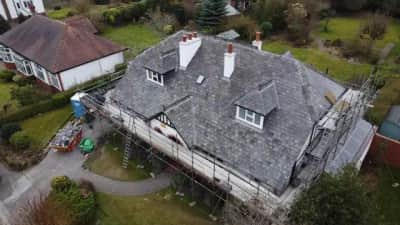
  1. Aged water-reed thatch on a late 1700s Adlington cottage at end of life, fire risk and rising insurance premiums had made the original covering unworkable Before
    Adlington (before): Aged water-reed thatch had reached end of life, fire risk and rising insurance premiums.
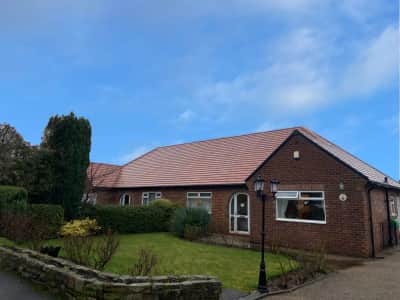
  2. Late 1700s Adlington cottage re-roofed in Greys Artstone synthetic slate with ornamental ridge after a thatch-to-slate conversion, heritage character retained, lightweight covering preserved the original timber structure After
    Adlington (after): Greys Artstone synthetic slate with ornamental ridge, heritage character retained, maintenance dropped to near zero.

Our Installation Process

Every job we carry out follows the same thorough process. No shortcuts, no surprises.

  1. Strip

    Removal of old tiles, felt, and battens, the existing covering is completely stripped back to expose the rafters.

  2. Inspect

    We check all rafters for rot, damage, and structural integrity. Any failed timber is repaired or replaced before anything else goes on.

  3. Membrane

    A modern vapour-permeable breathable membrane is installed, allowing your roof space to breathe and reducing condensation risk.

  4. Cover

    New battens are fixed, insulation upgraded to current Building Regulation standards, and your chosen tiles or slates are laid with dry ridge and all flashings completed.

Frequently asked questions

When does a re-roof trigger Building Regulations approval?

Building Regulations apply to any re-roof where 25% or more of the existing covering is being replaced. In practice, that means almost every full strip-and-recover job. Approval covers structural integrity, weatherproofing and, most commonly, upgrading the loft insulation to current U-values. We notify building control on your behalf as part of the quote, and the work is signed off on completion. Patch repairs and partial replacements under the 25% threshold do not require approval.

Do I need planning permission for a new roof?

In most cases, no. Replacing a roof falls under Permitted Development as long as the new material looks similar to the old and the roofline is not raised. Planning permission is only required if your property is listed, in a conservation area such as Marple Bridge or Knutsford, or if you are altering the roofline (e.g. adding a dormer). For listed and conservation work we source reclaimed slate or approved alternatives that satisfy council conservation officers.

How long does a typical re-roof take?

A standard semi-detached or terraced roof of around 80–110m² takes six to nine working days from scaffold up to skip away. Larger detached homes and complex pitched roofs run 10–14 days. Heritage and structural conversions, for example, thatch-to-tile or roofs needing new structural rafters, typically run two to three weeks. We programme the work weather-permitting and keep the roof watertight at the end of every day.

How much does a new roof cost in Stockport?

Most full domestic re-roofs in Stockport and East Cheshire fall between £8,000 and £18,000 depending on roof area, material chosen, and condition of the rafters once stripped. Reclaimed Welsh slate sits at the top of the range, modern clay and concrete tiles in the middle, and standard concrete tiles at the entry point. Every quote is itemised and written down, no verbal estimates and no costs added once work has started.

What guarantee comes with the work?

10+ year workmanship guarantee on all new roofs we install, backed by our insurance-backed guarantee scheme. Manufacturer guarantees on slate and tile cover the materials separately, typically 30 years on clay tiles and lifetime on natural slate. The membrane carries a manufacturer warranty in line with the system specified.

Areas we cover for New Roofs & Re-Roofing

We carry out full roof replacements and re-roofing across Stockport and East Cheshire. Each area has its own housing stock and material tradition, Victorian slate in the inner Stockport terraces, 1930s and 1960s tile in the southern suburbs, stone and reclaimed slate in the conservation villages east of Stockport, and a mix of premium and heritage work across the Cheshire commuter belt. Click through for local detail on the work we typically carry out in your area.

Stockport Core

The town centre and inner suburbs, late-Victorian and Edwardian terraces with original Welsh slate roofs that are mostly well past their hundred years. Nail corrosion, perished underfelt, and crumbling ridge mortar are universal across this housing stock. Most jobs are full strip-and-recover in reclaimed or new Welsh slate to match the streetscape, often with conservation officer involvement around Edgeley Park, Davenport, and the Heatons.

South Stockport

A mix of 1930s semi-detached and 1960s/70s detached homes, most originally roofed in concrete or clay tile. The original 1970s concrete is now fading and surface-delaminating across whole streets, replacing with clay tile is the most common upgrade we carry out here. Larger detached properties in Bramhall and Cheadle Hulme often involve complex hip and valley roofs with chimney leadwork that needs proper detailing on a re-roof.

Marple & East

The stone-built villages east of Stockport, including the Marple Bridge and Compstall conservation areas. A mix of original stone slate roofs on period cottages and Welsh slate on Victorian terraces, both demand reclaimed material sourcing and conservation officer engagement. Stone roofs in particular need structural review for their 100kg/m²+ load before any work begins, and we quote heritage work accordingly.

Poynton & East Cheshire

Premium properties across the East Cheshire commuter belt, inter-war and 1960s detached homes alongside the period stone of Bollington and Knutsford old town. Complex roof shapes with multiple hips, gables, and dormers are common, and a good proportion of the work involves listed buildings or properties in conservation areas like Poynton Old Village. Natural slate, reclaimed stone, and high-end clay tile dominate the work we carry out here.

View All Areas

Don't see your area listed? We almost certainly still cover it. Get in touch and we'll confirm.

Get a Free Quote for New Roofs & Re-Roofing

Call, email, or fill in the form. We'll get back to you with a free written quote, usually the same day.

Address

G6 Hallam Mill, Hallam Street,
Stockport, SK2 6PT

Please enter your full name.
Please enter a phone number.
Please enter a valid email address.
Project Type
Please describe your project.

Your details are safe. We never share them with third parties.