Insurance Claims Guide
Storm Damage Roof Claims in Stockport: Will Your Insurer Pay?
Tiles on the lawn, a damp patch spreading across the ceiling, and an insurer who'll want proof it was the storm and not the roof's age. Here's what buildings insurance actually covers, the evidence that gets roof claims paid, and the three ways we help across Stockport and East Cheshire, starting with a free quote.
The honest answer: yes for storm damage, no for wear and tear.
Water coming in right now? Skip the reading: emergency make-safe, guaranteed dry.

- Free storm damage quotes
- Same-day or next-day callouts
- Make-safe guaranteed dry, credited back
- Formal reports via NWRS
- Stockport & East Cheshire
About this guide
We're Daniel Scott Roofing, a family-run team of roofers covering Stockport and East Cheshire, and every stormy spell puts us up on roofs insurers are asking questions about. Insurers themselves tell claimants to get an itemised quote from a local tradesperson, and that's us: assessed, photographed and quoted in writing, free. What we don't write is the formal inspection report some insurers require to validate a claim. That comes from NWRS, our independent survey partner, who don't carry out repairs at all, which is exactly why their word counts. We do the roof. They do the report. The claim stays yours.
The honest verdict
Buildings insurance covers storm damage to a roof that was in reasonable condition before the weather hit. It doesn't cover wear and tear, and that one exclusion decides most roof claims. Your insurer will check two things: whether the weather in your postcode met the policy's definition of a storm, and whether the storm, or the roof's age, was the real cause. Both arguments are won with evidence. Your three routes to getting it are below, and the first one's free.
Does Home Insurance Cover Storm Damage to Your Roof?
Yes, if the damage was sudden and the storm caused it. Buildings insurance exists for exactly this: tiles stripped by wind, a ridge lifted, flashing torn away, a felt roof punctured by debris, and the water that got in through the hole the storm made.
What it never covers is a roof that was already failing. Wear and tear, gradual deterioration, and anything a reasonable owner should have fixed years ago are excluded on every policy we see, and insurers apply those exclusions hard. Fences and gates are usually excluded too, whatever the wind did to them.
Insurers paid out a record £585 million for weather damage to homes in 2024, and the Met Office expects winter windstorms to keep getting stronger. So the cover is real and it pays out at scale. Whether your claim pays comes down to two tests, and the next two sections take them in order.
Storm Leak or Worn Roof? The Question Your Insurer Will Ask
Every leak claim turns on that one question, because a leak is only covered when something insured caused it. If a storm strips tiles and rain gets in, the storm damage and the water damage it caused are normally covered. If water is coming through because the felt has perished, the flashings have opened up or the tiles have simply aged, that's wear and tear, and no standard policy covers it. There's a third case worth knowing: rain finding its way through gaps in an otherwise undamaged roof often needs accidental damage cover, an optional extra on many policies.
So the question your insurer will ask isn't "is the roof leaking?" but "what made it leak?". Answering that is leak tracing, which is the diagnostic work we do every week, and it's the difference between a claim and a repair bill.
What Counts as a Storm for an Insurance Claim?
"It was really windy" isn't a storm to an insurer. Most policies define one with thresholds, typically along these lines:
| Weather | Typical policy threshold |
|---|---|
| Wind | Gusts of 55mph or more |
| Rain | 25mm or more in an hour |
| Snow | 30cm or more in 24 hours |
| Hail | Intense enough to damage hard surfaces |
The first thing your insurer does with a claim is pull specialist weather data for your postcode and check it against that definition. Definitions vary between insurers, so the policy wording matters more than the Met Office headline.
Two things worth knowing. Recent seasons have opened with named storms carrying gusts above 90mph, so the threshold is cleared more often than people think. And the recorded wind speed isn't always the end of it: the ombudsman has sided with homeowners where local weather reports showed storm conditions even when the insurer's number said otherwise. Pass the weather test and the argument moves to the roof itself.
The Wear and Tear Trap: Why Storm Damage Roof Claims Get Rejected
Almost every rejected roof claim dies on the same sentence: "the storm merely highlighted a pre-existing issue." Here's how the argument actually gets decided.
When a declined claim reaches the Financial Ombudsman, they work through three questions. Did storm conditions occur around the date of the damage? Is the damage the kind a storm causes? And was the storm the main cause, rather than the condition of the roof? Yes to all three and the claim should be paid.
Two things sit in your favour. If the insurer wants to rely on the wear and tear exclusion, proving it applies is their job, not yours. And the ombudsman has criticised insurers for declining roofs off the back of an aerial photo without a proper inspection. A vague decline is challengeable. A detailed one, backed by evidence, usually isn't.
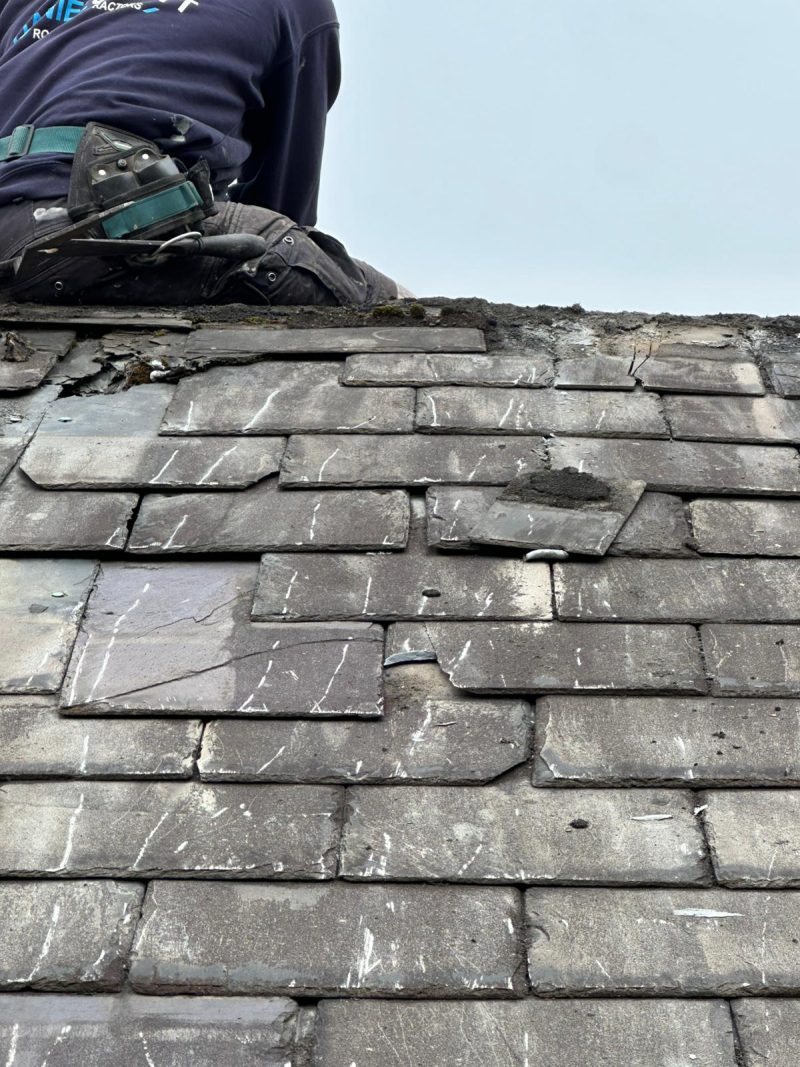
Which is where we owe you the other half of the truth: sometimes the insurer is right. A nail-sick slate roof that sheds tiles in a 40mph blow isn't storm damage, it's a roof at the end of its life, and we'll tell you that to your face rather than help you build a claim that'll fail. What you need either way is an honest read on which one you've got. Ours is free. And if your insurer wants the answer proven formally, that's a different document from a different company, and both routes are next.
A storm claim isn't an argument about the weather. It's an argument about the roof.
Quote, Make-Safe or Report? Your Three Routes for a Roof Insurance Claim
| Route | Cost | Best for | What you get |
|---|---|---|---|
| Itemised repair quote | Free | You've just had storm damage and need to know where you stand | Itemised written quote plus photos |
| Emergency make-safe (stops the leak) | Make-safe, credited back against the repair | Water's coming in and you need it stopped to protect the property | Guaranteed-dry make-safe, the repair, before-and-after photos |
| Independent NWRS report | Priced by NWRS | Insurer requires a report or disputes the cause | Impartial formal report for insurers and loss adjusters |
Storm damage on your roof?
Send us photos today and we'll tell you straight if you've got a claim.
The Evidence That Gets a Storm Damage Claim Paid
The ombudsman's own guidance says clear, detailed expert reports backed by photos are the most persuasive evidence there is. Build the file like this:
- Photograph everything before it's disturbed, wide shots and close-ups, inside and out, on a phone that date-stamps.
- Keep the debris. Blown-off tiles in the garden are physical evidence. Don't bin them.
- Write down the date and the conditions, and which named storm it was if there was one.
- Keep every make-safe invoice. Insurers expect you to stop things getting worse, and the paperwork proves you did.
- Get the weather on record: reports for your postcode on the date, not the national headline.
- Get a roofer's honest read and an itemised quote. Our free opinion tells you whether it looks like storm or wear, and the written quote gives you a price to work from. Neither is the formal proof of cause, so if your insurer wants that answered, an independent NWRS report (route 3) is the document that does it.
The Loss Adjuster's Visit: What to Have Ready
On larger claims the insurer sends a loss adjuster to inspect the damage before anything is agreed. They're appointed and paid by the insurer, so treat the visit as part of the claim rather than a formality: be there on the day, and walk them through your file rather than leaving them to read the roof from the ground. Have five things ready:
- The dated photo file, wide shots and close-ups, inside and out, from before anything was disturbed.
- Your written note of the storm date and conditions, with the named storm if there was one.
- The debris you kept. Blown-off tiles and ridge pieces are physical evidence; let the adjuster examine them.
- Your make-safe invoices, the proof you acted quickly to limit further damage.
- The itemised repair quote, so the visit ends with your figures on the table rather than a desktop estimate.
How to Claim for Storm Damage to Your Roof, Step by Step
Make it safe, not fixed.
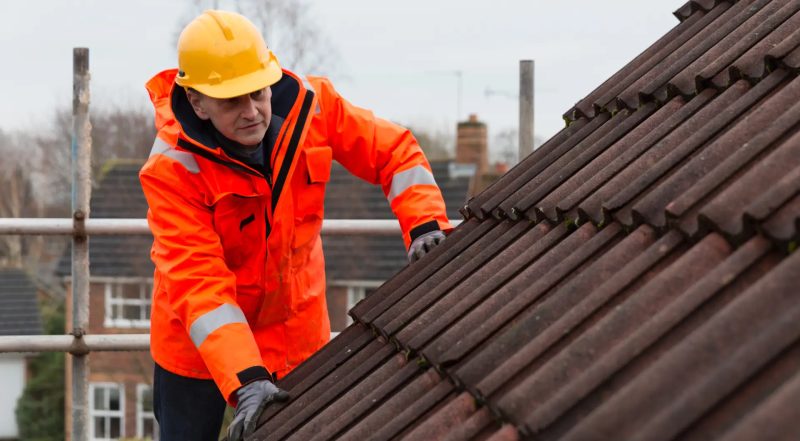
Stay off the roof yourself. Get make-safe done if water's coming in (guaranteed dry, invoice kept, cost credited if we do the full repair), but no permanent repairs until the insurer's seen the damage or agreed the scope.
Photograph and record.
Everything in the section above, before anything's disturbed.
Notify your insurer promptly.
Some policies set claim windows; all of them look sideways at delay.
Get the itemised quote.
The document the claim runs on, and the one the insurer will ask you for anyway. Free from us.
The loss adjuster's visit.
They're appointed by the insurer, and it shows. Be there, have your file ready.
Repair and sign-off.
Work done to the same standard and guarantee as any job we do, completion photos to close the file.
Roof Claim Rejected as Wear and Tear? What to Do Next
A rejection letter isn't the end, it's the insurer's opening position. Complain formally first: they get eight weeks to respond. If the answer's still no, or they miss the deadline, the Financial Ombudsman is free and it's where wear-and-tear declines go to be tested against those three questions.
The precedent worth knowing: a couple's storm claim was declined because the nails under their slates were rusty. They commissioned their own contractor's report, the ombudsman found it more detailed and more persuasive than the insurer's evidence, and the insurer was told to reconsider. Rusty slate nails, incidentally, is what we call nail sickness, and it's on half the Victorian terraces in Edgeley.
That's the fight where independence matters, and it's why the dispute route runs through NWRS rather than us. We'd profit from the repair; NWRS wouldn't. Their report answers one question with no stake in the answer: storm, or wear? That's the document a dispute turns on, and it's the one we hand to our partner rather than write ourselves.
Complain formally.
Tell your insurer you're making a formal complaint about the decline. They get eight weeks to give you a final response, and the complaint forces a named person to look at the file again and re-justify the decision, rather than letting an aerial photo stand as the last word.
Build the counter-file.
A contractor's inspection with dated photos, a written opinion on what caused the damage, the local weather data for the date, and your make-safe invoices. Our itemised quote and honest read on the cause are free. The formal, impartial report on cause is the document that comes from NWRS.
Go to the Ombudsman.
The Financial Ombudsman Service is free, and it tests a declined storm claim against three questions. Score your own claim against them before you go:
- Did storm conditions occur around the date of the damage?
- Is the damage the kind a storm causes?
- Was the storm the main cause, rather than the condition of the roof?
Three yeses and the decline is worth fighting. If you can't honestly answer yes to the third, that's worth knowing before you spend months on it, and we'll tell you which it is for free.
When Your Home Insurer Asks for a Roof Report: Flat Roofs and Renewal Conditions
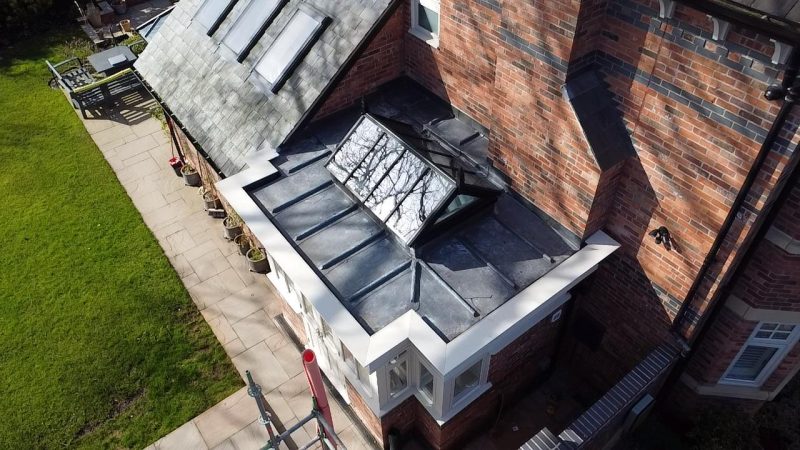
Not every insurance roof report follows a storm. Home insurers increasingly make cover conditional on a professional inspection, usually where there's a large or ageing flat roof, at renewal or when you switch. Those reports come from NWRS, and if the report finds work needed, that's the part we do: a modern EPDM or fibreglass flat roof with paperwork reassures an underwriter the same way it reassures a buyer's mortgage valuer.
Storm Damage in Stockport and East Cheshire: What We See After Every Big Blow
The Pennine edge
Marple Bridge, High Lane, Disley
First postcodes to clear 55mph when the wind gets up. Ridge tiles and stone slate go first, and the weather data usually backs the claim.
Slate terraces and the nail sickness fight
Edgeley, Reddish
After a storm these streets shed slates, and the insurer's first question is whether rusty nails or the wind did it. This is the exact battleground of the ombudsman precedent above, and the stock where an honest read before you claim saves the most grief.
Clay tile and flaunching claims
Bramhall, Cheadle Hulme, Hazel Grove
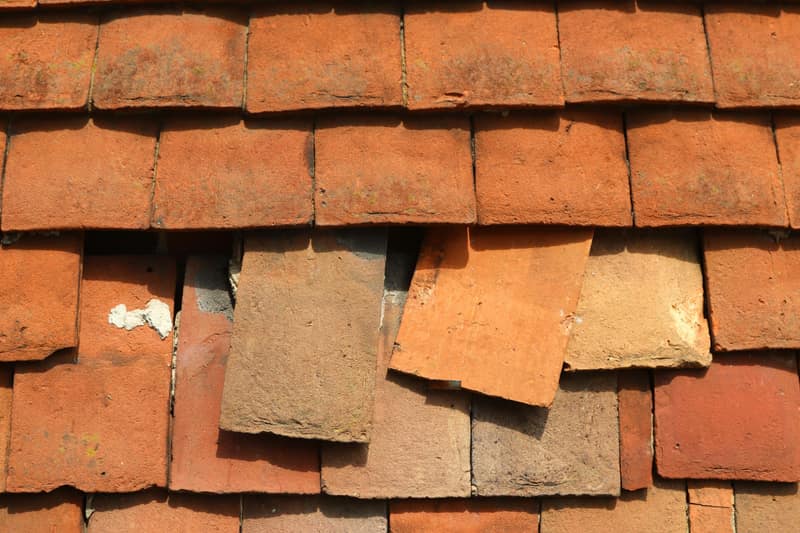
Cracked flaunching and snapped rosemary tiles after a big blow. Small claims, quick to photograph, quick to evidence against the weather data, and usually quick for the insurer to agree.
Concrete tile estates and end-of-life declines
Offerton, Woodley
The covering insurers most often argue is past its useful life. When a storm strips these roofs, the claim turns entirely on evidence and honesty, and we will tell you which side of the line yours sits on before you ring them.
Roof Insurance Claims: Frequently Asked Questions
Is the water damage inside my house covered too?
Usually, yes, when the roof damage itself is covered. Buildings insurance normally picks up the internal damage the storm caused, ceilings, plaster and decoration, while contents cover handles your belongings. Photograph the internal damage as carefully as the roof, and don't redecorate until the insurer has seen it.
Can I use my own roofer for an insurance repair?
Normally, yes. Insurers routinely ask claimants for an itemised quote from a local tradesperson, and most are happy for your own contractor to do the work provided the quote is reasonable and itemised. Some offer their own network as an option. Check your policy, but you rarely have to accept it.
Should I repair the roof before the insurer has seen it?
Make it safe, don't make it permanent. Insurers expect you to stop the damage getting worse, so temporary make-safe work is fine and the invoice supports your claim. Permanent repairs before the insurer has assessed the damage or agreed the scope can undermine the claim, so hold off until they have.
How long do I have to claim for storm damage?
It varies by policy. Some insurers set no formal deadline but every one of them expects prompt notification, and some policies expect to hear within weeks of the storm. Delay also invites the question of when the damage really happened. Note the date, photograph everything, and ring them as soon as you reasonably can.
Will claiming for storm damage put my premiums up?
It can affect your renewal price, and after a widespread storm, premiums in affected postcodes can rise whether you claimed or not. That's why we'll always put the repair cost next to your excess first: if the numbers don't justify a claim, we'll say so, and the decision stays yours.
What does a loss adjuster look for on a storm damaged roof?
Evidence of a sudden event rather than gradual failure: clean breaks and displaced coverings rather than uniform decay, damage consistent with the recorded wind direction and speed, and whether the rest of the roof was in reasonable condition before the storm. They will also check you acted to limit further damage, which is what your make-safe invoices prove.
Do I need an independent report or just a roofer's quote?
For most claims, the itemised quote (free from us) plus your own photos is exactly what the insurer asks for. A formal independent report is only needed when the insurer requires one, disputes the cause, or makes it a condition of cover. Those come from NWRS, and never from us.
Qualified, Insured and Local
-
CORC Accredited Member

-
CITB Certified

-
City & Guilds

-
NFRC Competent Person

-
NWRTG Member

-
NVQ Qualified



Rated 5 stars by 50 homeowners. Read our Google reviews.
Storm Damaged? Start With a Free Quote and a Straight Answer.
- Free storm damage repair quotes
- An honest steer, including "that's wear and tear" when it is
- Make-safe guaranteed dry, credited back against the full repair
- Formal and dispute reports via NWRS, never written by us
Enquiry Sent!
Thank you. We'll be in touch shortly, usually the same working day.
Need us sooner? Call 0161 566 7522
Something Went Wrong
We couldn't send your enquiry. Please try again or contact us directly.